

Why Reaching, Handling, Fingering, and Feeling Matter in Alabama Workers ‘Compensation and Social Security Disability Claims
Most people assume that if they can still walk, stand, or lift a few pounds, they don’t have a chance of getting awarded Social Security Disability benefits. Fortunately, Social Security sees the issue differently.
Long before deciding whether someone can lift 10 pounds or stand for six hours, the Social Security Administration asks a more basic question:
Can this person still use their hands effectively?
That may sound like a simple question, but it is one of the most important issues in both Social Security Disability and many Alabama workers’ compensation cases. Whether you are gripping a steering wheel, typing on a keyboard, operating machinery, handling tools, sorting paperwork, writing with a pen, or buttoning a shirt, your hands are involved.
Social Security recognizes this reality. In fact, SSA policy specifically identifies reaching, handling, fingering, and feeling as basic work activities required in almost every occupation.
Social Security Recognizes That Hands Matter
Several Social Security rulings discuss manipulative limitations. Among the most important rules on this subject are:
Collectively, these authorities recognize that significant limitations involving the hands may eliminate a substantial number of jobs—even jobs classified as sedentary as many sedentary jobs require constant use of both hands throughout the workday.
What Do These Terms Mean?
Social Security evaluates several different hand functions.
Reaching
Extending the hands and arms in any direction. Examples include:
- reaching overhead
- reaching forward
- reaching across a work surface
Many shoulder, neck, and nerve injuries affect reaching.
Recommended Reading: How Shoulder Injuries Affect Alabama Workers’ Compensation and Social Security Disability Claims
Handling
Handling refers to grasping, holding, seizing, or turning objects. Examples include:
- holding tools
- carrying boxes
- gripping a steering wheel
- opening doors
- lifting grocery bags
Loss of handling ability often results from:
- arthritis
- tendon injuries
- nerve damage
- severe carpal tunnel syndrome
Recommended Reading: How a Hand or Wrist Injuries Affect Alabama Workers’ Compensation and Social Security Disability Claims
Fingering
Fingering involves fine manipulation. Examples include:
- typing
- writing
- sorting paperwork
- using small tools
- assembling products
- buttoning clothing
This is one of the most important functions in sedentary work.
Feeling
Feeling involves detecting characteristics of objects through the fingertips. Workers may lose this ability because of:
- diabetic neuropathy
- permanent nerve injuries
- cervical radiculopathy
- CRPS
- advanced carpal tunnel syndrome
Loss of sensation affects safety as much as productivity.
Bilateral Manual Dexterity Matters
Social Security generally assumes workers can effectively use both hands; this is known as bilateral manual dexterity. Many sedentary occupations require simultaneous use of both hands throughout the workday. When both upper extremities become impaired, the available job base may shrink dramatically.
This is why injuries involving both wrists, both hands, or multiple nerve distributions often become vocationally significant.
Recommended Reading: Why Grip Strength Matters in Workers’ Compensation and Social Security Disability Claims
Recommended Reading: How the use of a Cane of other Assistive Walking Device Affects your claim
Workers’ Compensation Cases Can Become Vocational Cases
Under Alabama workers’ compensation law, many hand injuries begin as scheduled injuries. Standing alone, a scheduled injury may limit compensation, but serious complications may change the analysis.
Examples include:
- chronic nerve damage
- CRPS
- permanent loss of grip strength
- bilateral injuries
- medication side effects
- pain affecting the body as a whole
When the effects of the injury extend beyond the scheduled member, the case may involve vocational disability.
What appears to be “just a hand injury” may ultimately prevent someone from returning to the only work they have ever performed.
Recommended Reading: Can a Scheduled Injury Become a Body-as-a-Whole Injury?
Recommended Reading: How Chronic Pain Affects your Workers’ Compensation and Social Security Disability claim
Recommended Reading: How the Side Effects of Medication Affect your claim
Functional Capacity Evaluations Often Measure These Abilities
Many injured workers undergo a Functional Capacity Evaluation (FCE).
Although workers often focus on lifting tests, FCEs frequently evaluate:
- grip strength
- pinch strength
- handling
- fingering
- dexterity
- coordination
- repetitive use
These findings often become permanent work restrictions.
Those restrictions may ultimately determine whether a worker can return to their previous occupation.
Recommended Reading: Understanding Functional Capacity Evaluations (FCEs)
Permanent Restrictions Can Change Everything
Imagine a worker receives these permanent restrictions:
- no repetitive gripping
- no forceful grasping
- occasional handling
- occasional fingering
- no repetitive use of vibrating tools
A mechanic.
Electrician.
Welder.
Nurse.
Poultry worker.
Assembly-line employee.
Truck mechanic.
None of these workers may be able to return to their previous employment.
The diagnosis is important; the restrictions are often even more important.
Recommended Reading: What Do Permanent Work Restrictions Mean in Workers’ Compensation and Social Security Disability Cases?
Age and Work History Matter Too
Social Security does not evaluate manipulative limitations in isolation. They also considers:
- age
- education
- transferable skills
- past relevant work
- residual functional capacity
For younger workers, retraining may be possible.
For older workers with decades of heavy manual labor and few transferable skills, severe manipulative limitations may become the deciding factor in a disability claim.
Sometimes the combination of:
- permanent hand restrictions,
- advanced age,
- limited education, and
- lack of transferable skills
results in a finding of disability under the Medical-Vocational Guidelines.
Recommended Reading: What Happens If I Can’t Return to My Job After a Work Injury? Workers’ Compensation and Social Security Disability Explained
Recommended Reading: How Age affects your claim
Recommended Reading: What Are Transferable Skills?
Recommended Reading: What Constitutes Past Relevant Work?
Reaching, handling, fingering, and feeling are not minor abilities—they are basic work functions required in nearly every occupation. When disease or injury permanently limits those functions, the impact can extend far beyond the hands themselves. Whether caused by repetitive trauma, nerve damage, arthritis, CRPS, cervical spine injuries, or another medical condition, significant manipulative limitations can affect both an Alabama workers’ compensation claim and a Social Security Disability claim. They may determine whether an injured worker can return to past employment, perform other work, or qualify for vocational disability benefits.
At Powell & Denny, we have represented injured and disabled workers throughout Alabama for more than 30 years. We understand how serious spine injuries can affect both workers’ compensation claims and Social Security Disability claims, so don’t hesitate to contact the experienced attorneys at Powell and Denny today a free consultation; remember. Virtual appointments are available through Zoom so you can meet with one of the attorneys of Powell and Denny from wherever you live, and remember-there is no fee unless you win.
Powell & Denny: We Work When You Can’t.
Offices in Huntsville, Alabama and Birmingham, AL
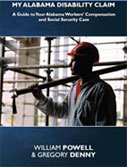
We Wrote the Book
My Alabama Disability Claim by William Powell & Gregory Denny Click Here to Get Your Free Copy


-
 5.0/5.0
A++++++ got results and staff is friendly
-
5.0/5.0
A++++++ got results and staff is friendly
-
5.0/5.0
Persevering for 2-3 years to get my disability. Thank You.
-
5.0/5.0
Persevering for 2-3 years to get my disability. Thank You.
-
 5.0/5.0
William Powell is an excellent attorney and a leader in our local bar.
