
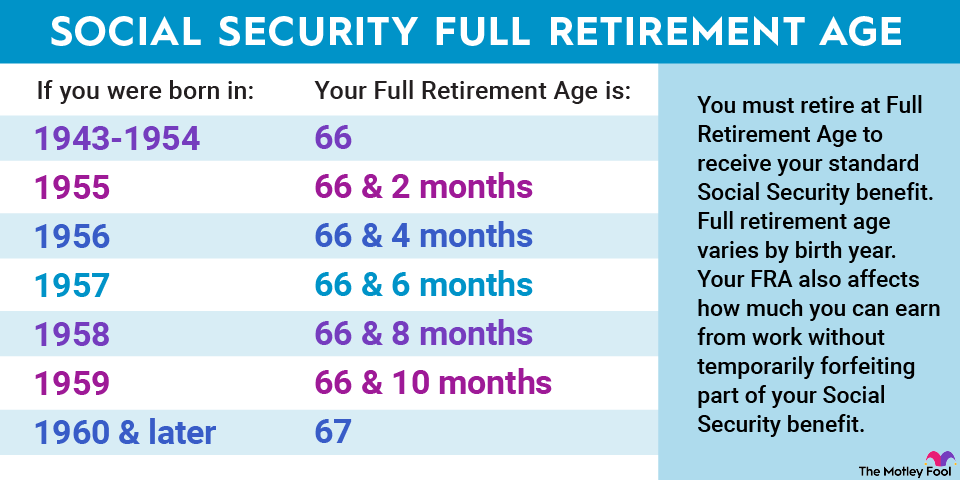
Why Does Social Security Care How Old I Am? Understanding Age Categories and the Grid Rules
One of the most surprising things many Social Security Disability claimants learn is that age can significantly affect the outcome of a disability claim. Many people assume disability cases are decided solely by medical evidence. They think: “Either I am disabled or I am not.”
However, Social Security considers several factors when evaluating disability claims, including:
- Medical conditions;
- Education;
- Work history;
- Transferable job skills; and
- Age.
As a result, two people with similar medical conditions may receive very different outcomes depending on their age and vocational background.
Why Does Age Matter?
Social Security recognizes a simple reality: As people get older, it often becomes more difficult to learn new job skills, adapt to new occupations, or compete in the labor market after a serious illness or injury. For that reason, Social Security’s rules become more favorable to claimants as they move into certain age categories.
This does not mean older individuals automatically qualify for disability benefits; however, age can become an important factor when determining whether a person can realistically adjust to other work.
What Are the Social Security Age Categories?
Social Security divides claimants into several vocational age categories.
Younger Individuals (Under Age 50)
Generally, individuals under age 50 are considered “Younger Individuals,” and Social Security assumes that younger workers are more capable of adapting to new types of employment. As a result, younger claimants often face a more difficult path to obtaining disability benefits unless their medical limitations are particularly severe.
For many younger workers, Social Security expects them to retrain or transition into different types of work if possible.
Closely Approaching Advanced Age (Ages 50-54)
Once a claimant reaches age 50, the rules begin to change. Social Security recognizes that vocational adjustment becomes more difficult as we all age. At this stage, a claimant’s education, prior work experience, and transferable skills become increasingly important.
In many cases, age 50 can be a significant milestone in a disability claim.
Advanced Age (Ages 55-59)
Claimants between ages 55 and 59 are considered individuals of “Advanced Age.” At this stage, Social Security is much less likely to assume that a worker can successfully transition into an entirely different occupation, and for workers who have spent decades performing physically demanding jobs, this age category can become extremely important.
Closely Approaching Retirement Age (Age 60 and Older)
Individuals age 60 and above fall into the category of “Closely Approaching Retirement Age.” Social Security recognizes that vocational adjustment becomes even more difficult at this stage of life. As a result, the vocational rules often become more favorable to older workers whose medical conditions prevent them from performing their past work.
What Are the Grid Rules?
The Medical-Vocational Guidelines, commonly referred to as the “Grid Rules,” are a set of rules Social Security uses to determine whether certain claimants should be found disabled.
The Grid Rules consider:
- Age;
- Education;
- Work history;
- Transferable skills; and
- Physical limitations.
Rather than focusing solely on medical diagnoses, the Grid Rules evaluate whether a claimant can realistically transition to other work.
How Do the Grid Rules Work?
Imagine two workers with identical back injuries.
Both workers:
- Have a high school education;
- Have spent their careers performing heavy labor;
- Are now limited to sedentary work.
One worker is 45 years old.
The other worker is 58 years old.
Although their medical limitations may be identical, Social Security may evaluate their claims differently because of their age. The younger worker may be expected to adapt to other employment, while the older worker may qualify under the Grid Rules because Social Security recognizes the practical difficulty of changing careers late in life.
Why Work History Matters
Age alone does not determine whether someone qualifies for disability benefits.
Social Security also considers:
- Previous occupations;
- Skill levels;
- Educational background; and
- Whether job skills transfer to other work.
For example, a highly skilled office worker may be evaluated differently than a construction worker whose career involved primarily physical labor. The Grid Rules examine all of these factors together.
Why This Issue Is Important
Many disability claimants become discouraged after hearing “You’re too young to get disability.” In reality, there is no age requirement for disability benefits. Individuals in their twenties, thirties, and forties can absolutely qualify if their medical conditions are severe enough.
At the same time, older workers often have important vocational advantages under Social Security’s rules that younger workers do not.
Understanding how age affects a disability claim can help explain why two people with similar medical conditions may receive different outcomes.
Age is one of the most important vocational factors in a Social Security Disability claim. As claimants move from the category of Younger Individual to Closely Approaching Advanced Age, Advanced Age, and Closely Approaching Retirement Age, Social Security’s analysis often changes significantly.
Because these rules are complex and highly fact-specific, properly evaluating a disability case often requires careful analysis of medical evidence, work history, education, and vocational factors.
For decades, the attorneys at Powell and Denny have represented disability claimants throughout Alabama and have extensive experience handling claims involving the Medical-Vocational Guidelines and Grid Rules, so if you have questions about the Grid Rules, age categories, SSDI benefits, SSI benefits, or an appeal of a denied disability claim, don’t hesitate to contact the experienced attorneys at Powell and Denny today a free consultation; remember, virtual appointments are available through Zoom so you can meet with one of the attorneys of Powell and Denny from wherever you live, and there is no fee unless you win.
Powell and Denny: We Work When You Can’t.
Offices in Birmingham and Huntsville, Alabama.
We Wrote the Book
My Alabama Disability Claim by William Powell & Gregory Denny Click Here to Get Your Free Copy


-
 5.0/5.0
A++++++ got results and staff is friendly
-
5.0/5.0
A++++++ got results and staff is friendly
-
5.0/5.0
Persevering for 2-3 years to get my disability. Thank You.
-
5.0/5.0
Persevering for 2-3 years to get my disability. Thank You.
-
 5.0/5.0
William Powell is an excellent attorney and a leader in our local bar.
