

I Can’t Do My Old Job Anymore. Why Does Social Security Think I Can Do Another One? Transferability of Job Skills
One of the most frustrating things a disability claimant can hear is: “You can’t return to your old job, but Social Security believes you can perform other work.” Most people are left wondering “How can Social Security say I can do another job when I can’t even do the one I’ve done for the last 20 years?”
The answer often involves something called transferable skills.
Although many claimants have never heard the term before, transferable skills can play a significant role in determining whether a Social Security Disability claim is approved or denied.
What Are Transferable Skills?
Transferable skills are job skills learned in previous employment that can be used in a different occupation. Social Security looks at the knowledge and abilities you gained through your past relvant work experience and asks “Can these skills be transferred to another type of job?”
If the answer is yes, Social Security may conclude that you can still perform other work even if you can no longer perform your previous job.
Social Security Disability benefits are not awarded simply because a person can no longer perform their former job. Instead, Social Security asks two separate questions:
First Question
Can you return to your past relevant work?
If the answer is yes, the claim will generally be denied.
Second Question
If you cannot return to your past work, can you perform other work that exists in significant numbers in the national economy?
This is where transferable skills become important.
Examples of Transferable Skills
Many workers develop skills throughout their careers without realizing it.
Examples may include:
- Supervising employees;
- Scheduling work assignments;
- Maintaining records;
- Bookkeeping;
- Computer skills;
- Customer service;
- Sales experience;
- Inventory management;
- Operating specialized equipment;
- Technical knowledge.
Some of these skills may transfer to other occupations; others may not.
Consider two workers who suffer similar injuries and are limited to sedentary work.
Worker One
A 58-year-old construction laborer. For thirty years, he performed heavy physical labor and has few computer skills and little experience performing office work. In this situation, Social Security may determine that his job skills do not readily transfer to sedentary occupations.
Worker Two
A 58-year-old office manager with extensive experience with:
- Computers;
- Scheduling;
- Recordkeeping;
- Customer communications;
- Administrative duties.
Social Security may conclude that many of those skills can transfer to other sedentary jobs.
The medical limitations may be identical, but the vocational analysis can be very different.
What Is a Vocational Expert?
Many disability hearings include testimony from a vocational expert. A vocational expert is a specialist who evaluates:
- Past work history;
- Skill levels;
- Transferable skills;
- Job requirements;
- Available occupations.
The vocational expert often provides testimony regarding whether a claimant possesses skills that can be transferred to other jobs.
This testimony can become a critical part of the disability decision.
Transferable skills become especially important as claimants get older. Social Security recognizes that it is generally more difficult for older workers to adapt to new occupations, and as a result, age categories can significantly affect how transferable skills are evaluated.
For example:
- Younger Individuals (under age 50);
- Closely Approaching Advanced Age (50-54);
- Advanced Age (55-59); and
- Closely Approaching Retirement Age (60 and older)
are treated differently under Social Security’s rules.
This is one reason two claimants with similar medical conditions may receive different outcomes.
What Are the Grid Rules?
The Medical-Vocational Guidelines, often called the “Grid Rules,” are a set of rules Social Security uses when evaluating disability claims.
The Grid Rules consider:
- Age;
- Education;
- Work history;
- Residual Functional Capacity;
- Transferable skills.
In some situations, a claimant’s age and lack of transferable skills can result in a finding of disability even though the claimant may still be physically capable of performing some limited work activities.
Why This Issue Is Important
Many claimants focus entirely on their medical conditions, and while medical evidence is extremely important, disability claims are often decided by vocational issues as well, questions such as:
- What work did you perform?
- What skills did you acquire?
- Can those skills transfer to another occupation?
Age, education, work history, and transferable skills can all affect the outcome of a disability claim.; understanding how Social Security analyzes transferable skills can help explain why some claims are approved while others are denied—even when the medical conditions appear similar.
For decades, the attorneys at Powell and Denny have represented disability claimants throughout Alabama and have extensive experience handling cases involving vocational issues, transferable skills, and the Medical-Vocational Guidelines, so if you have questions about the Grid Rules, age categories, SSDI benefits, SSI benefits, or an appeal of a denied disability claim, don’t hesitate to contact the experienced attorneys at Powell and Denny today a free consultation; remember, virtual appointments are available through Zoom so you can meet with one of the attorneys of Powell and Denny from wherever you live, and there is no fee unless you win.
Powell and Denny: We Work When You Can’t.
Offices in Birmingham and Huntsville, Alabama.
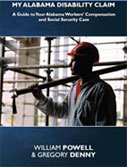
We Wrote the Book
My Alabama Disability Claim by William Powell & Gregory Denny Click Here to Get Your Free Copy


-
 5.0/5.0
A++++++ got results and staff is friendly
-
5.0/5.0
A++++++ got results and staff is friendly
-
5.0/5.0
Persevering for 2-3 years to get my disability. Thank You.
-
5.0/5.0
Persevering for 2-3 years to get my disability. Thank You.
-
 5.0/5.0
William Powell is an excellent attorney and a leader in our local bar.
