
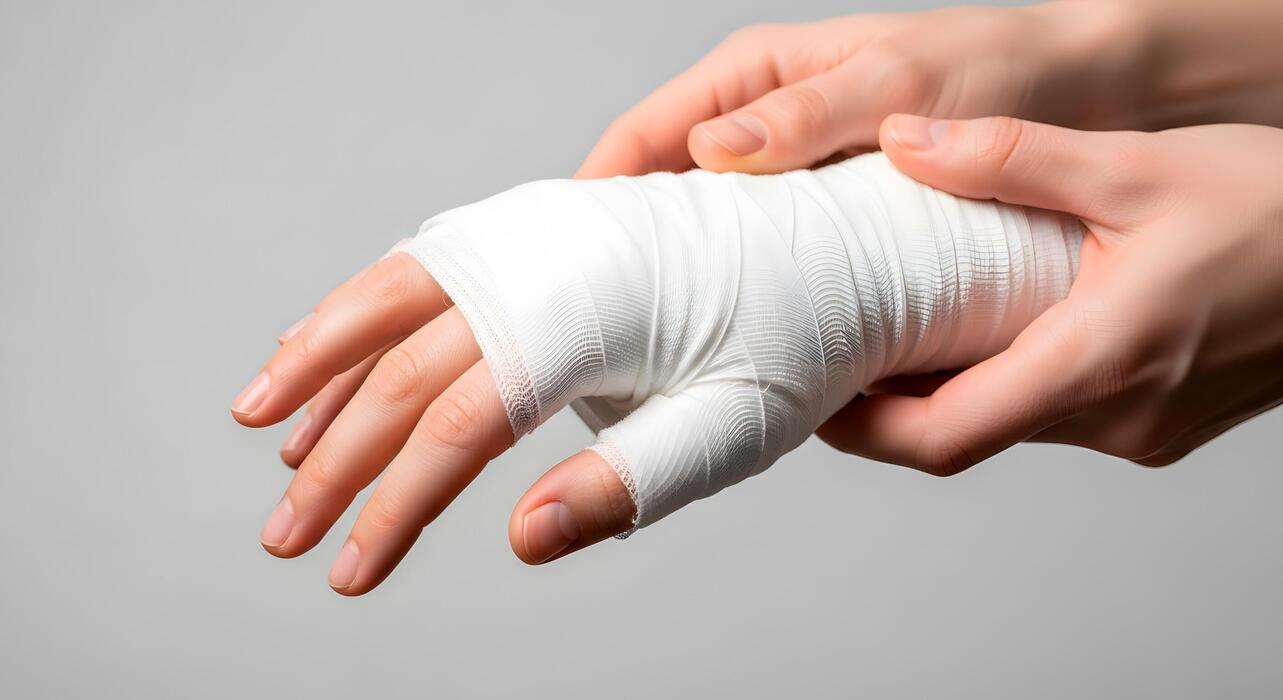
Can a Hand or Wrist Injury Lead to Both Workers Compensation and Social Security Disability Benefits?
Most people do not realize how much they rely on their hands until they lose the ability to use them.
Opening a jar.
Buttoning a shirt.
Typing on a keyboard.
Holding a hammer.
Using a screwdriver.
Gripping a steering wheel.
Picking up a child.
Almost every job—and almost every activity of daily living—requires the use of both hands.
That is why a serious injury to the hand or wrist can have consequences far beyond the initial accident. While many hand injuries are treated as scheduled injuries under Alabama Workers’ Compensation law, the same injury may become an important factor in a Social Security Disability claim, particularly when permanent nerve damage or loss of hand function develops.
Hand and Wrist Injuries Are Extremely Common
Through more than 30 years of representing injured workers throughout Alabama, we have handled hundreds of cases involving injuries to the hands and wrists. These injuries frequently occur in occupations such as:
- manufacturing;
- poultry and meat processing;
- construction;
- warehouse work;
- healthcare;
- automotive repair;
- machine operation;
- office work;
- landscaping; and
- assembly-line production.
Many of these jobs require workers to perform the same hand motions hundreds—or even thousands—of times each day. Others involve saws, presses, knives, heavy equipment, or machinery capable of causing catastrophic injuries in an instant.
Common Hand and Wrist Injuries
Some of the most common work-related injuries include:
- carpal tunnel syndrome;
- cubital tunnel syndrome;
- tendon injuries;
- nerve injuries;
- crush injuries;
- fractures;
- ligament tears;
- trigger finger;
- finger amputations; and
- severe lacerations.
Some occur after a single traumatic accident; others develop gradually over months or years of repetitive work.
Repetitive Work Can Cause Compensable Injuries
Many people assume workers’ compensation only covers sudden accidents. That is not true.
Alabama recognizes that certain repetitive-motion conditions—including carpal tunnel syndrome—may qualify as occupational diseases when the medical evidence connects the condition to repetitive job duties.
Workers in poultry plants, meat processing facilities, manufacturing plants, warehouses, and other production environments often perform the same gripping, twisting, cutting, or assembly motions throughout an entire shift. Over time, those repetitive activities may compress nerves, inflame tendons, and permanently damage hand function.
Why Nerve Damage Matters
Some workers recover completely after treatment or carpal tunnel release surgery.
Others continue experiencing:
- numbness;
- tingling;
- burning pain;
- weakness;
- loss of grip strength;
- loss of fine motor coordination;
- dropping objects;
- decreased sensation; or
- chronic pain.
When permanent nerve damage develops, the injury may affect far more than a person’s ability to lift heavy objects. It may affect their ability to use their hands throughout an entire workday.
Why Hand Injuries Can Become More Complicated in Workers’ Compensation Cases
Under Alabama Workers’ Compensation law, injuries involving the hand, wrist, fingers, and arm are often treated as scheduled injuries because those body parts appear in the statutory schedule.
However, some cases become more complicated. For example, questions may arise when:
- chronic pain affects the body as a whole;
- Complex Regional Pain Syndrome (CRPS) develops; or
- permanent nerve damage extends beyond the injured member
Those situations sometimes require a much more detailed legal and medical analysis than a routine scheduled injury.
Work Restrictions Often Matter More Than the Diagnosis
One of the most important questions after a serious hand injury is not simply: “What was the diagnosis?” Instead, it is: “What can the worker safely do now?”
Permanent restrictions may include:
- no repetitive gripping;
- no forceful grasping;
- limited handling;
- limited fingering;
- lifting restrictions;
- avoidance of vibrating tools; or
- no repetitive assembly work.
Those restrictions may permanently prevent a worker from returning to occupations involving production work, construction, healthcare, machine operation, or skilled trades.
Why Hand Function Is So Important in Social Security Disability Cases
This is where workers’ compensation and Social Security often begin to differ. Social Security evaluates a person’s ability to perform sustained competitive employment.
Many people think sedentary work simply means sitting at a desk. In reality, most sedentary jobs require frequent use of both hands.
Social Security has recognized that most unskilled sedentary jobs require good bilateral manual dexterity and repetitive use of the hands and fingers for handling and fingering small objects. Significant limitations involving both hands can substantially reduce the number of jobs available in the national economy.
Likewise, Social Security recognizes that reaching, handling, fingering, and feeling are basic work activities required in almost every occupation. In fact, the Administration treats fine fingering, grasping, and bilateral manual dexterity as critical work functions. When a claimant cannot perform these tasks reliably, SSA policy says the sedentary occupational base is significantly eroded, and in many cases this limitation can be disabling, especially under SSR 96‑9p, SSR 85‑15, and POMS DI 25020.005
Age and Work History Can Become Extremely Important
Imagine a 59-year-old poultry plant worker who has spent thirty-five years performing repetitive production work. After developing severe bilateral carpal tunnel syndrome, the worker undergoes surgery on both wrists but continues experiencing numbness, weakness, and loss of grip strength. The worker is now permanently restricted from repetitive gripping and forceful hand use.
That individual may no longer be able to return to past relevant work. When those permanent limitations are considered together with the worker’s:
- age;
- education;
- work history;
- transferable skills; and
- residual functional capacity,
Social Security may conclude that competitive employment is no longer realistic.
In some situations, the Medical-Vocational Guidelines—commonly known as the Grid Rules—may become an important part of the disability analysis.
A serious hand injury may involve two very different legal analyses. Workers’ compensation focuses primarily on the work-related injury itself and the benefits available under Alabama law.
Social Security asks a broader question: Can this individual perform substantial gainful activity considering all medically determinable impairments?
The same medical records may be used in both cases, but the legal standards are very different. Understanding those differences can make a significant difference in how both claims are presented.
At Powell & Denny, we have spent more than 30 years representing injured and disabled workers throughout Alabama. Because we regularly handle both Workers’ Compensation and Social Security Disability claims, we understand how the same hand injury may be evaluated very differently under each system—and why those differences matter.
If you have questions about an Alabama Workers’ Compensation claim, or a claim for Social Security Disability benefits, At Powell & Denny, we have represented injured and disabled workers throughout Alabama for more than 30 years, so don’t hesitate to contact the experienced attorneys at Powell and Denny today a free consultation; remember. Virtual appointments are available through Zoom so you can meet with one of the attorneys of Powell and Denny from wherever you live, and remember-there is no fee unless you win.
Powell & Denny: We Work When You Can’t.
Offices in Huntsville, Alabama and Birmingham, AL
We Wrote the Book
My Alabama Disability Claim by William Powell & Gregory Denny Click Here to Get Your Free Copy


-
 5.0/5.0
A++++++ got results and staff is friendly
-
5.0/5.0
A++++++ got results and staff is friendly
-
5.0/5.0
Persevering for 2-3 years to get my disability. Thank You.
-
5.0/5.0
Persevering for 2-3 years to get my disability. Thank You.
-
 5.0/5.0
William Powell is an excellent attorney and a leader in our local bar.
