
How an Altered Gait Can Affect Alabama Workers Compensation and Social Security Disability Claims
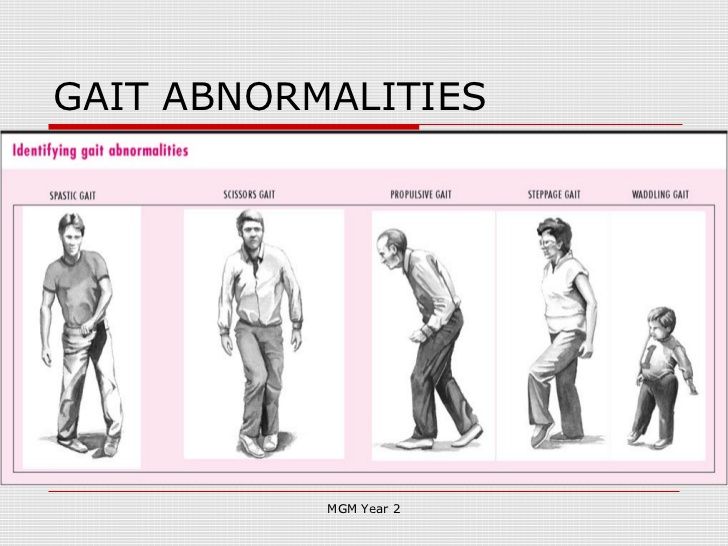
After suffering a serious injury to a knee, ankle, foot, hip, or leg, many injured workers develop what doctors call an altered gait. Most people simply call it walking with a limp.
At first glance, that may not seem like a significant medical issue. After all, if your knee hurts, it makes sense that you would place more weight on your other leg, but over time, an altered gait can create an entirely new set of medical problems—problems that may become just as disabling as the original injury.
From both a workers’ compensation and Social Security Disability standpoint, an altered gait can become one of the most important pieces of evidence in a case.
What Is an Altered Gait?
A normal gait allows your body weight to be distributed evenly as you walk. When pain, weakness, instability, or limited range of motion changes the way you walk, doctors describe this as an altered gait or antalgic gait.
Common causes include:
- knee injuries;
- foot or ankle injuries;
- hip injuries;
- leg fractures;
- severe arthritis;
- nerve injuries;
- Complex Regional Pain Syndrome (CRPS).
Instead of walking normally, the injured worker may:
- limp;
- favor one leg;
- shift weight to the opposite side;
- shorten their stride;
- use a cane or walker.
Initially, this helps reduce pain.
Over time, however, it often creates new problems.
One Injury Can Lead to Several Others
Human beings were designed to walk with our weight distributed evenly. When one leg bears significantly more weight than the other for months—or even years—the rest of the body begins compensating.
An altered gait can contribute to:
- hip pain;
- lower back pain;
- pain in the opposite knee;
- sacroiliac (SI) joint problems;
- muscle imbalance;
- balance problems;
- additional falls.
In other words, what began as a knee injury may eventually affect the worker’s entire musculoskeletal system.
Recommended Reading:
How Knee Injuries Affect Workers’ Compensation and Social Security Disability Claims
How Hip Injuries Affect Workers’ Compensation and Social Security Disability Claims
How Foot Injuries Affect Workers’ Compensation and Social Security Disability Claims
Why Altered Gait Matters in Alabama Workers’ Compensation Cases
Many injuries involving the:
- foot;
- ankle;
- leg;
- knee
are considered scheduled injuries under Alabama’s Workers’ Compensation Act.
Ordinarily, compensation is limited to the statutory schedule, but Alabama courts have long recognized that some injuries extend beyond the scheduled member.
An altered gait may eventually cause:
- chronic back pain;
- hip degeneration;
- spinal problems;
- widespread pain;
- balance issues;
- additional orthopedic injuries.
When the effects of the original injury extend to the body as a whole, the case may no longer remain confined to the schedule. That can significantly affect the value of a workers’ compensation claim because vocational disability and loss of earning capacity may become relevant.
Recommended Reading: Scheduled vs. Non-Scheduled Injuries Under Alabama Workers’ Compensation Law
Standing and Walking Become Vocational Issues
Many jobs require workers to spend most of the day on their feet. When an altered gait limits standing or walking, returning to many occupations may become impossible.
Instead of focusing solely on the medical diagnosis, vocational experts often begin asking:
- How long can the worker stand?
- How far can they walk?
- Do they require a cane?
- Can they safely climb stairs?
- Can they maintain balance?
- Will they require unscheduled breaks?
Those questions frequently become more important than the diagnosis itself.
Recommended Reading:
Altered Gait Is Important in Social Security Disability Claims
Social Security looks at altered gait differently than workers’ compensation.
Instead of asking whether the injury is scheduled or non-scheduled, Social Security asks:
How does the altered gait affect your ability to perform full-time work?
Walking limitations frequently affect a claimant’s Residual Functional Capacity (RFC).
Social Security considers issues such as:
- standing tolerance;
- walking endurance;
- balance;
- climbing;
- postural activities;
- use of assistive devices;
- ability to sustain activity throughout an eight-hour workday.
These limitations may reduce a claimant from:
- medium work;
- to light work;
- or from light work to sedentary work.
For older workers, that reduction can dramatically change the outcome of a disability claim because of the Medical-Vocational Guidelines (the “Grid Rules”).
Recommended Reading:
How Postural Restrictions Affect Workers’ Compensation and Social Security Disability Claims
Understanding Social Security’s Grid Rules
Transferability of Job Skills in Social Security Disability Claims
Many workers with altered gait eventually begin using:
- a cane;
- a walker;
- crutches.
Sometimes these devices are formally prescribed-sometimes they are not.
Even when not prescribed, they may still reflect significant functional limitations. The important issue is not simply whether you use a cane, it is why you need one.
If a cane is necessary because of instability, weakness, pain, or balance problems, those limitations may affect both workers’ compensation and Social Security Disability claims.
Recommended Reading: Does Using a Cane or other Walking Device Matter?
Chronic Pain Often Makes the Problem Worse
Walking differently often increases pain; more pain frequently means:
- stronger medications;
- reduced concentration;
- fatigue;
- poor sleep;
- depression;
- anxiety.
Eventually the worker may be limited not only by orthopedic problems but also by chronic pain and the side effects of treatment.
These combined limitations often become just as important as the original injury.
Recommended Reading:
Can the Side Effects of Medication Affect My Workers’ Compensation Claim?
Can the Side Effects of Medication Affect My Disability Claim?
Medical Documentation Is Extremely Important
If your altered gait is causing additional pain, tell your physician.
Medical records documenting:
- abnormal gait;
- balance problems;
- use of an assistive device;
- secondary hip pain;
- secondary back pain;
- worsening function
can become important evidence in both workers’ compensation and Social Security Disability claims. Likewise, if your doctor recommends restrictions involving standing, walking, climbing, or balancing, those restrictions should be clearly documented.
Recommended Reading:
How Functional Capacity Evaluations (FCEs) Affect Workers’ Compensation Claims
An altered gait may seem like nothing more than a limp, but medically and legally it can become one of the most significant consequences of a workplace injury, but what begins as an injury to a knee, foot, ankle, or leg can eventually affect the hips, spine, balance, mobility, and the ability to perform even basic work activities. In Alabama workers’ compensation cases, an altered gait may support an argument that a scheduled injury has affected the body as a whole. In Social Security Disability claims, limitations in standing, walking, balancing, and endurance can significantly reduce the range of jobs a person is capable of performing.
At Powell & Denny, we have represented injured and disabled workers throughout Alabama for more than 30 years. We understand how serious spine injuries can affect both workers’ compensation claims and Social Security Disability claims, so don’t hesitate to contact the experienced attorneys at Powell and Denny today a free consultation; remember. Virtual appointments are available through Zoom so you can meet with one of the attorneys of Powell and Denny from wherever you live, and remember-there is no fee unless you win.
Powell & Denny: We Work When You Can’t.
Offices in Huntsville, Alabama and Birmingham, AL
We Wrote the Book
My Alabama Disability Claim by William Powell & Gregory Denny Click Here to Get Your Free Copy


-
 5.0/5.0
A++++++ got results and staff is friendly
-
5.0/5.0
A++++++ got results and staff is friendly
-
5.0/5.0
Persevering for 2-3 years to get my disability. Thank You.
-
5.0/5.0
Persevering for 2-3 years to get my disability. Thank You.
-
 5.0/5.0
William Powell is an excellent attorney and a leader in our local bar.
