
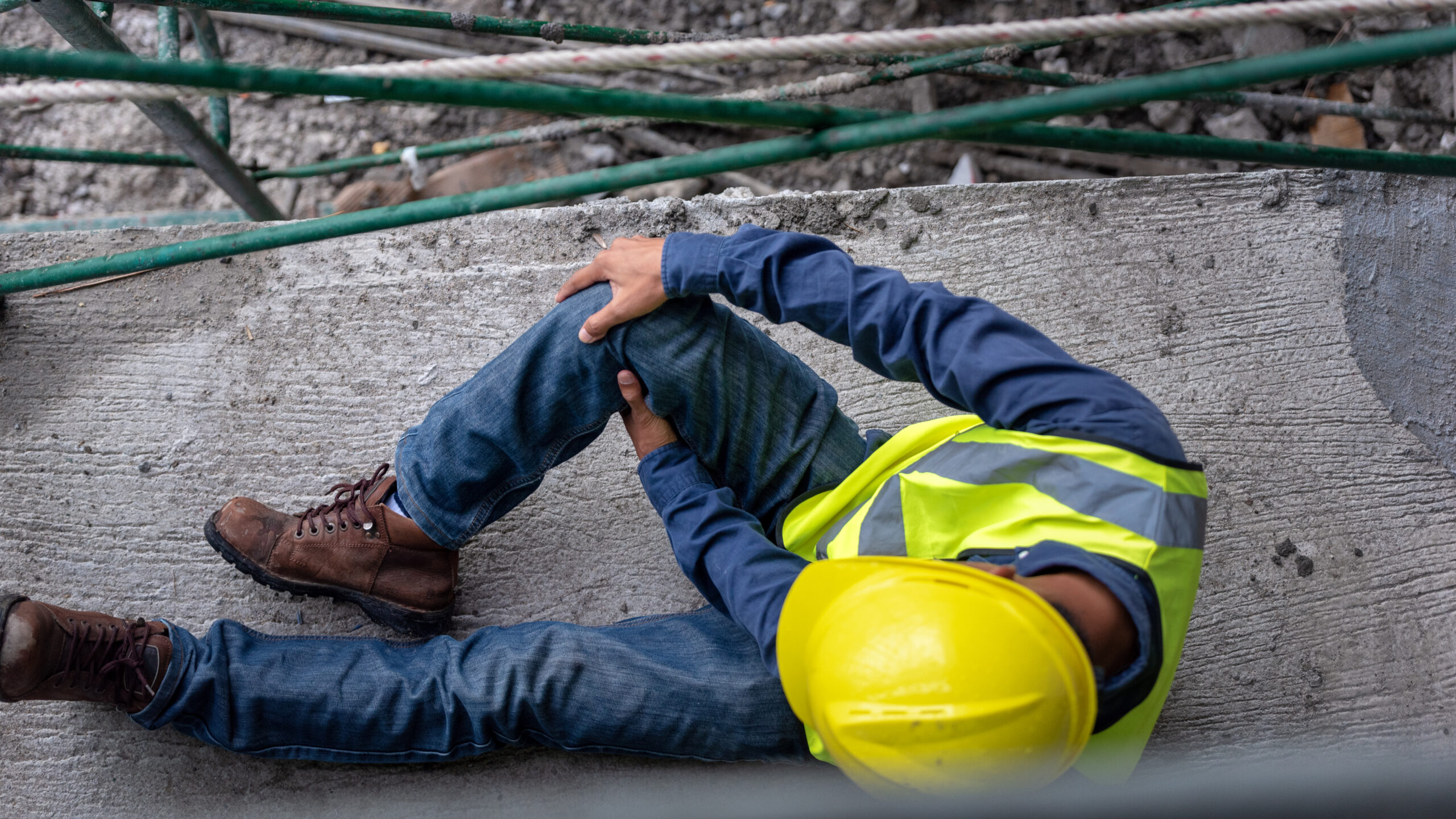
Can a Knee Injury Lead to Both Workers Compensation and Social Security Disability Benefits?
Many people think of a knee injury as a relatively routine workplace injury. After all, professional athletes tear their ACL or meniscus every season and often return to competition after surgery. Unfortunately, real life is not always that simple.
A serious knee injury can permanently change how a person walks, stands, climbs, kneels, and performs physical work. For some injured workers, the knee injury becomes much more than an injury to a single joint—it affects the entire body and, in some cases, leads to both an Alabama Workers’ Compensation claim and a Social Security Disability claim.
Knee Injuries Are Among the Most Common Workplace Injuries
Workers who perform physically demanding jobs place tremendous stress on their knees every day. We frequently represent workers who suffer knee injuries while:
- lifting heavy objects;
- climbing ladders;
- jumping from equipment;
- twisting while carrying materials;
- slipping or falling;
- squatting or kneeling repeatedly; or
- working on uneven surfaces.
Common knee injuries include:
- torn meniscus;
- ACL tears;
- MCL tears;
- PCL tears;
- cartilage injuries;
- patellar injuries; and
- traumatic arthritis.
Some workers recover completely-others never regain the strength, stability, or endurance they once had.
“It’s Just Arthritis”
One of the most common arguments injured workers hear is “Your MRI shows arthritis. This isn’t from work.” That statement often causes workers to believe they have no claim, but that is not necessarily true.
As we grow older, many people develop arthritis or degenerative changes in their knees. Goodness knows I have. However, the important legal question is usually not whether arthritis existed before the accident. The question is:
If so, Alabama workers’ compensation law may still provide benefits, because Alabama law does not require workers to begin their employment with perfect knees.
A Knee Injury Can Affect More Than the Knee
One of the most overlooked consequences of a serious knee injury is an altered gait.
When one knee hurts, people naturally begin placing more weight on the opposite leg. They may limp. They may favor one side. They may shift their weight to avoid pain. Over time, those changes can create new problems involving:
- the opposite knee;
- the hips;
- the lower back;
- the ankles;
- balance; and
- chronic pain.
The body was designed to move as a unit. When one part stops functioning normally, other parts often compensate, and eventually, those body parts may begin to hurt as well.
Why Altered Gait Matters in Alabama Workers’ Compensation
Under Alabama Workers’ Compensation law, many knee injuries are initially treated as scheduled injuries because the leg is one of the body parts listed in the statutory schedule. However, the legal analysis may become much more complicated when the effects of the knee injury extend beyond the leg itself.
For example, an altered gait may contribute to:
- chronic back pain;
- hip pain;
- problems involving the opposite knee;
- loss of balance;
- chronic pain syndrome;
- the use of a cane or other assistive device; or
- other conditions affecting the body as a whole.
When that occurs, questions may arise regarding whether the injury should continue to be treated as a scheduled injury or whether the evidence supports consideration of vocational disability.
Surgery Is Not Always the End of the Story
Many workers undergo arthroscopic surgery or even total knee replacement. Some recover well, while others continue to experience:
- chronic pain;
- swelling;
- instability;
- limited motion;
- weakness;
- difficulty climbing stairs;
- difficulty standing for prolonged periods; or
- permanent work restrictions.
A successful surgery does not always mean a worker can successfully return to the same occupation. Postural limitations are an important factor in both Alabama workers’ compensation cases and claims for Social Security Disability benefits.
When a Knee Injury May Lead to Social Security Disability
Not every knee injury qualifies someone for Social Security Disability benefits; most do not-but that does not mean that it can’t in and of itself, or as a factor in a claim for disability benefits.
Suppose a 60-year-old construction worker tears his knee, undergoes surgery, and is permanently limited to sedentary work. He has spent forty years performing heavy labor. He has no computer skills. He has no experience performing office work. His injury has also caused an altered gait that contributes to chronic back pain and arthritis in his opposite knee.
In that situation, the worker may have far more than a knee injury. They may have medical limitations that prevent them from returning to any of his past work.
Social Security Looks at the Whole Person
One of the biggest differences between Social Security Disability and Alabama Workers’ Compensation is what each system evaluates. Social Security considers:
- all medically determinable impairments;
- age;
- education;
- past relevant work;
- transferable job skills;
- residual functional capacity; and
- whether jobs exist in significant numbers that the claimant can perform.
For older workers, these factors become increasingly important.
In certain circumstances, the Social Security Medical-Vocational Guidelines—commonly called the Grid Rules—may direct a finding of disabled when an individual of advanced age is limited to sedentary or light work and cannot return to past relevant work.
A serious knee injury, standing alone, may not qualify someone for Social Security Disability, but when combined with age, limited education, a lifetime of heavy labor, chronic pain, permanent restrictions, and other medical conditions, it may become an important part of a successful disability claim.
Why It Helps to Understand Both Systems
A serious knee injury may involve far more than an MRI or an impairment rating. Questions may arise concerning:
- aggravation of preexisting arthritis;
- altered gait;
- secondary back or hip problems;
- does the injury affect other body parts;
- vocational disability;
- permanent restrictions;
- future medical treatment; and
- Social Security Disability eligibility.
Although the same injury may be involved, Alabama Workers’ Compensation and Social Security Disability evaluate that injury under different legal standards. Understanding those differences can make a significant difference in how both claims are presented.
Many people think of a knee injury as “just a knee injury, “when in reality, a serious knee injury can affect nearly every aspect of a person’s ability to work.
At Powell & Denny, we have spent more than 30 years representing injured workers throughout Alabama in both Workers’ Compensation and Social Security Disability claims. We understand that a knee injury is sometimes far more than an injury to a single joint. It may become a case involving vocational disability, chronic pain, multiple body systems, and the inability to continue earning a living.
If you have questions about an Alabama Workers’ Compensation claim, or a claim for Social Security Disability benefits, At Powell & Denny, we have represented injured and disabled workers throughout Alabama for more than 30 years, so don’t hesitate to contact the experienced attorneys at Powell and Denny today a free consultation; remember. Virtual appointments are available through Zoom so you can meet with one of the attorneys of Powell and Denny from wherever you live, and remember-there is no fee unless you win.
Powell & Denny: We Work When You Can’t.
Offices in Huntsville, Alabama and Birmingham, AL
We Wrote the Book
My Alabama Disability Claim by William Powell & Gregory Denny Click Here to Get Your Free Copy


-
 5.0/5.0
A++++++ got results and staff is friendly
-
5.0/5.0
A++++++ got results and staff is friendly
-
5.0/5.0
Persevering for 2-3 years to get my disability. Thank You.
-
5.0/5.0
Persevering for 2-3 years to get my disability. Thank You.
-
 5.0/5.0
William Powell is an excellent attorney and a leader in our local bar.
