
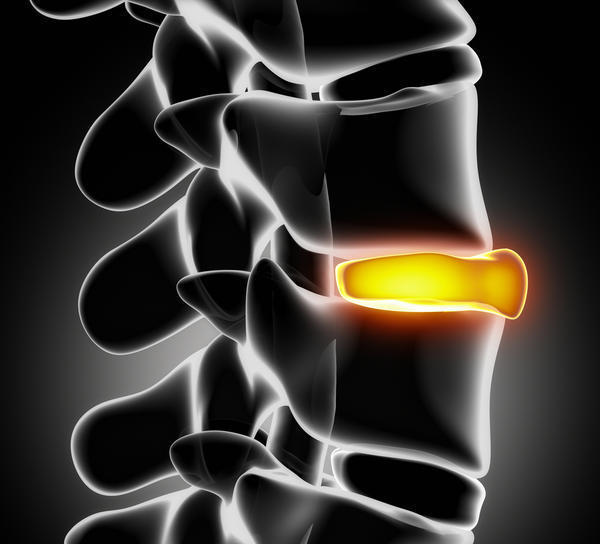
Herniated Discs, Workers’ Compensation and Social Security Disability Benefits
Back and neck injuries are among the most common serious injuries we see in Alabama workers’ compensation claims. One of the most frequent diagnoses is a herniated disc, sometimes called a ruptured disc, slipped disc, disc protrusion, disc extrusion, herniated nucleus pulposus, or pinched nerve.
For some workers, a herniated disc improves with conservative treatment and they are able to return to work. For others, the injury leads to surgery, permanent restrictions, chronic pain, and the inability to return to the kind of work they have performed most of their lives.
When that happens, the injured worker may need to consider not only an Alabama workers’ compensation claim, but also a claim for Social Security Disability benefits.
What Is a Herniated Disc?
The spine is made up of bones called vertebrae. Between those bones are discs that act as cushions and help the spine move. A herniated disc occurs when the inner portion of the disc pushes through the outer layer. Many people have disc bulges or herniations without symptoms. Pain often begins when the disc material irritates or presses on a nerve.
Depending on where the herniation occurs, symptoms may include:
- neck pain;
- low back pain;
- pain into the shoulder blade;
- pain running down an arm or leg;
- numbness or tingling;
- weakness;
- burning or shooting pain;
- problems standing, walking, lifting, sitting, or using the hands or
- bladder or bowel symptoms.
Common levels includeL4-5 and L5-S1 in the lower back, and C5-6 and C6-7 in the neck.
Neck Injuries Can Be Mistaken for Shoulder Injuries
A cervical herniated disc may cause pain in the neck, shoulder, shoulder blade, arm, hand, or fingers. Because of this, some injured workers are initially treated as if they have a shoulder problem, such as a rotator cuff injury, when the real source of pain is the neck. The opposite can also happen: doctors may focus on the neck when the real problem is the shoulder.
That is one reason careful diagnosis is so important.
Degeneration Versus a Work Injury
Insurance companies often argue that a herniated disc is simply “degenerative” or the result of ordinary wear and tear. Sometimes they are right that degeneration existed before the accident, but that does not necessarily end the case.
Many workers have degenerative disc disease and are still able to perform their jobs without limitation. If a work accident aggravates, accelerates, or worsens an underlying condition and causes symptoms or disability, the injury may still be compensable under Alabama workers’ compensation law.
Workers’ compensation is not limited to people with perfect spines.
Related Reading: Preexisting conditions.
Treatment for a Herniated Disc
Treatment often begins conservatively, including:
- medication;
- physical therapy;
- activity modification;
- injections;
- pain management; and
- work restrictions.
If conservative treatment fails, or if there is significant nerve compression, weakness, or worsening symptoms, surgery may be recommended. Some workers undergo discectomy, decompression, or fusion surgery.
A spinal fusion is a serious procedure. It may help reduce pain and instability, but it can also lead to permanent restrictions. Whether to undergo surgery is a major medical decision that belongs to the patient.
Related Reading: Do I have to have surgery if I don’t want it?
Why Herniated Discs Matter in Workers’ Compensation Claims
In an Alabama workers’ compensation claim, the focus is usually on how the work injury affects the worker’s ability to earn a living. Important issues may include:
- whether the injury was reported on time;
- whether the employer authorized medical treatment;
- whether surgery is necessary;
- when the worker reaches maximum medical improvement;
- permanent restrictions;
- impairment ratings;
- future medical treatment;
- ability to return to the same job; and
- whether the worker has suffered a loss of earning capacity or permanent total disability.
A herniated disc can be especially serious for people who have spent their lives doing physical work, such as construction, manufacturing, healthcare, warehouse work, truck driving, iron work, steel work, or convenience store workers.
A person with a desk job may be able to return to work after a disc injury. A person whose job requires lifting, bending, twisting, climbing, pushing, pulling, or prolonged standing may not.
Related Reading: What if I suffered a Permanent Impairment?
When a Herniated Disc May Lead to Social Security Disability
Not every herniated disc results in Social Security Disability.
Social Security does not award benefits simply because someone has a diagnosis. The question is whether the condition, alone or in combination with other medical problems, prevents the person from performing full-time work on a regular and continuing basis.
A herniated disc may become part of a strong Social Security Disability claim when it causes:
- chronic pain;
- nerve damage;
- weakness;
- inability to sit or stand long enough to work;
- need to lie down during the day;
- failed back surgery syndrome;
- medication side effects;
- depression or anxiety related to chronic pain;
- permanent restrictions; or
- inability to sustain competitive employment.
Social Security may also consider other medical conditions along with the herniated disc, such as arthritis, diabetes, heart disease, obesity, depression, anxiety, COPD, or other conditions.
That is one important difference between Social Security Disability and workers’ compensation. Social Security generally considers all medically determinable impairments. Workers’ compensation focuses on the work-related injury and its compensable consequences.
Related Reading: Is my diagnosis enough to be awarded disability benefits?
Why It Helps to Have a Lawyer Who Understands Both Systems
A serious herniated disc claim can involve both Alabama workers’ compensation and Social Security Disability.
The same medical records may matter in both cases, but the legal standards are different.
Workers’ compensation may focus on:
- the work accident;
- authorized treating physicians;
- MMI;
- impairment ratings;
- permanent restrictions;
- vocational disability; and
- future medical care.
Social Security may focus on:
- all medical conditions;
- residual functional capacity;
- age;
- education;
- past relevant work;
- transferable skills; and
- whether jobs exist in significant numbers.
A workers’ compensation settlement can also affect Social Security Disability benefits because of the workers’ compensation offset. Settlement language may matter greatly.
That is why a worker with a serious spine injury should be careful before settling a workers’ compensation claim without considering how it may affect a Social Security Disability claim.
If you suffered a herniated disc at work, it is important to understand both the medical and legal issues involved. You may have rights under Alabama workers’ compensation law. If your condition prevents you from working on a sustained basis, you may also need to consider Social Security Disability benefits.
At Powell & Denny, we have represented injured and disabled workers throughout Alabama for more than 30 years. We understand how serious spine injuries can affect both workers’ compensation claims and Social Security Disability claims, so don’t hesitate to contact the experienced attorneys at Powell and Denny today a free consultation; remember. Virtual appointments are available through Zoom so you can meet with one of the attorneys of Powell and Denny from wherever you live, and remember-there is no fee unless you win.
Powell & Denny: We Work When You Can’t.
Offices in Huntsville, Alabama and Birmingham, AL
We Wrote the Book
My Alabama Disability Claim by William Powell & Gregory Denny Click Here to Get Your Free Copy


-
 5.0/5.0
A++++++ got results and staff is friendly
-
5.0/5.0
A++++++ got results and staff is friendly
-
5.0/5.0
Persevering for 2-3 years to get my disability. Thank You.
-
5.0/5.0
Persevering for 2-3 years to get my disability. Thank You.
-
 5.0/5.0
William Powell is an excellent attorney and a leader in our local bar.
