
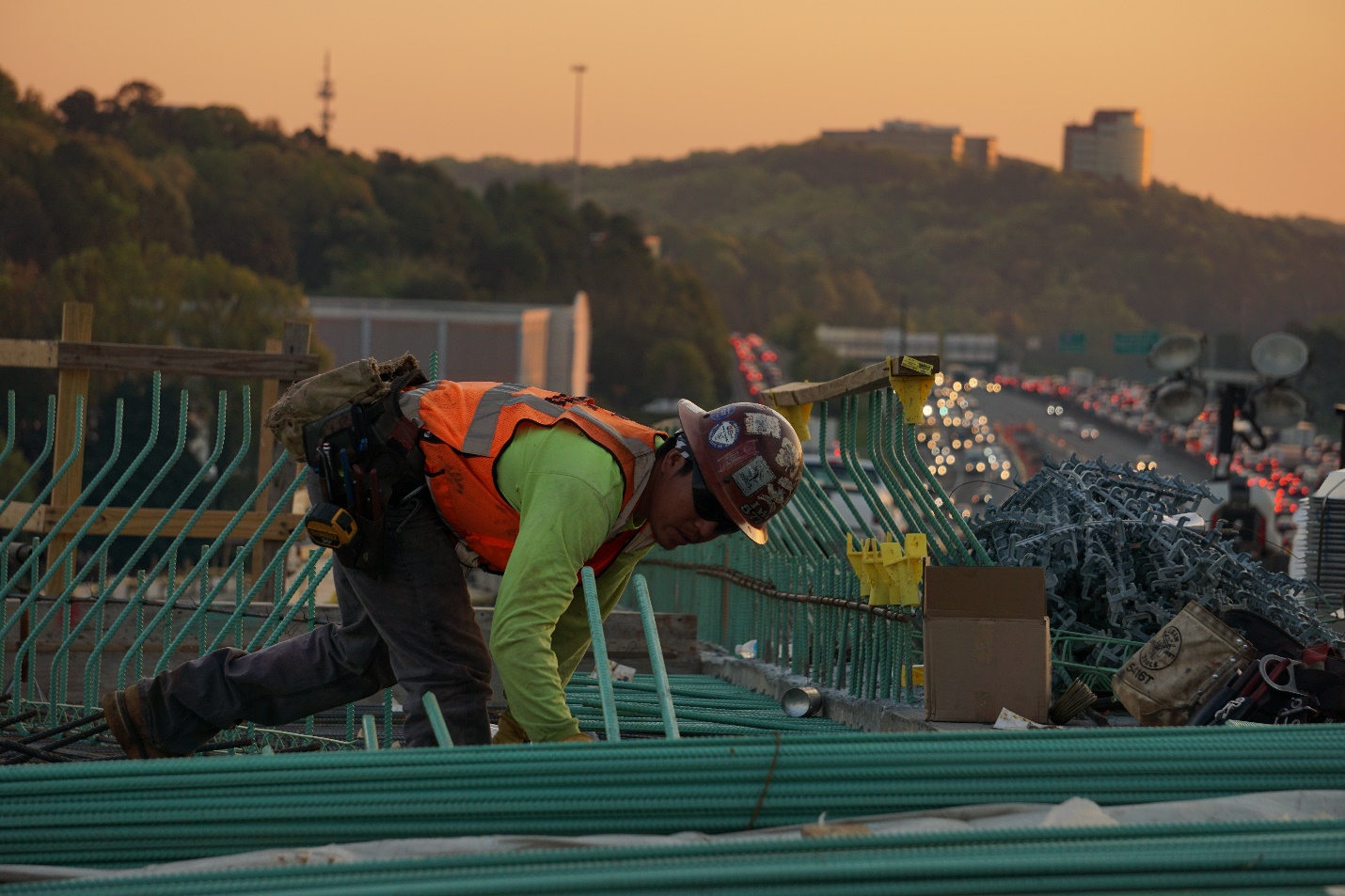
What Are the Most Dangerous Jobs in Alabama?
Every job carries some risk of injury, but working at a desk does not expose an employee to the same hazards as driving an 80,000-pound tractor-trailer, working several stories above the ground, operating industrial machinery, cutting timber, or caring for patients who must be lifted and moved.
Some Alabama workers face serious hazards every day simply because of the work they perform.
So, what are the most dangerous jobs in Alabama? There isn’t one simple answer.
A job can be dangerous because workers suffer injuries frequently. Another occupation may have fewer injuries but a much greater risk that an accident will be fatal. Still another may expose workers to repetitive lifting, machinery, falls, motor vehicle collisions, or other hazards capable of causing permanent disability.
The most recent data from the U.S. Bureau of Labor Statistics (BLS) help show where some of those risks occur, and according to the 2024 BLS statistics, in 2024, 75 workers died from occupational injuries in Alabama. Alabama’s fatal occupational injury rate was 3.6 deaths per 100,000 full-time-equivalent workers.
But fatalities tell only part of the story.
Alabama private-industry employers reported approximately 27,900 nonfatal workplace injuries and illnesses in 2024. About 15,600 of those cases were serious enough to involve days away from work, job transfer, or work restrictions.
Those numbers illustrate something we have seen repeatedly representing injured Alabama workers:
A dangerous job does not have to kill someone to permanently change that person’s ability to work.
What Does “Most Dangerous” Actually Mean?
There are several ways to measure workplace danger. We can look at:
- the number of workers killed;
- the fatality rate relative to the number of people working in an industry;
- the number of nonfatal injuries;
- the rate at which workers are injured;
- injuries resulting in missed work or restrictions; and
- the likelihood that an accident produces a catastrophic or permanently disabling injury.
Those measures do not necessarily identify the same occupations.
For example, Alabama’s 2024 data show why looking only at reported nonfatal injury rates can be misleading. The reported total-recordable-case rate for Alabama’s private construction industry was 0.8 cases per 100 full-time workers in 2024; yet 14 Alabama construction workers died from occupational injuries that year, and the industry’s fatal injury rate was 8.2 per 100,000 full-time-equivalent workers.
Construction therefore presents serious fatal hazards even though a different statistical measure might make the industry appear relatively safe. That is why we should be careful about declaring any single occupation the “most dangerous job in Alabama.”
Transportation Is One of Alabama’s Most Significant Workplace Hazards
The clearest finding in Alabama’s most recent fatality data concerns transportation. Of Alabama’s 75 fatal occupational injuries in 2024, 32 resulted from transportation incidents. That was approximately 43% of all occupational fatalities in the state and made transportation incidents the most frequent fatal event category.
The industry numbers tell a similar story. Transportation and warehousing accounted for 22 occupational deaths in Alabama in 2024. Fifteen occurred in truck transportation.
More broadly, the BLS fatality rate for Alabama’s transportation and utilities sector was 16.2 deaths per 100,000 full-time-equivalent workers in 2024.
For Alabama workers who spend much of their working day on the highway, a car or truck wreck is not merely a traffic accident. It can also be a workplace accident.
Why Are Truck Drivers at Risk?
Commercial truck drivers face several overlapping hazards.
They spend substantially more time on the road than most workers. Their jobs can involve interstate travel, nighttime driving, congested highways, construction zones, loading areas, adverse weather, and long periods behind the wheel.
And not every truck-driver injury results from a highway collision.
Drivers may also be injured while:
- loading or unloading cargo;
- climbing into or out of a truck;
- coupling or uncoupling trailers;
- securing loads;
- lifting freight;
- walking through loading yards;
- working around forklifts and other vehicles; or
- performing roadside activities.
The 2024 Alabama numbers underscore the seriousness of the risk: truck transportation alone accounted for 15 occupational fatalities in the state.
Recommended Reading: What Should I Do After a Car Accident While Working?
Alabama Workers Compensation and Professional Truck Drivers
Tow Truck Operators: 4th Most Dangerous Job in America
Construction Workers Face a Different Set of Dangers
Construction remains another important high-risk Alabama industry. In 2024, 14 occupational fatalities occurred in Alabama construction, representing approximately 19% of all occupational fatalities in the state. Nine of those deaths occurred among specialty trade contractors.
Construction workers can encounter:
- falls from roofs, scaffolds, ladders, and elevated work areas;
- falling materials;
- heavy equipment;
- electrocution hazards;
- trenches and excavation;
- power tools;
- moving vehicles;
- construction-zone traffic; and
- machinery.
The important point for an injured worker is that the mechanism of injury can affect much more than workplace safety statistics. If a construction worker falls from scaffolding, the case may principally involve workers’ compensation. If that same worker is struck by a negligent motorist while working alongside a highway, there may potentially be both a workers’ compensation claim and a third-party personal injury claim.
That distinction is one reason construction injuries fit naturally into both sides of this series.
Recommended Reading: Can I Have Both a Workers Compensation Claim and a Personal Injury Claim?
Manufacturing Workers Suffer Thousands of Alabama Workplace Injuries
Fatalities are not the only useful measure of workplace danger. Manufacturing provides a good example.
Alabama manufacturing employers reported approximately 7,100 nonfatal occupational injuries and illnesses in 2024. About 4,200 involved days away from work, job transfer, or restriction. The industry’s total-recordable-case rate was 2.5 cases per 100 full-time workers.
Seven Alabama manufacturing workers also suffered fatal occupational injuries during 2024.
Manufacturing injuries can involve machinery, repetitive work, lifting, falling objects, forklifts, industrial vehicles, slips and falls, and other hazards. These accidents can produce orthopedic injuries involving the back, neck, shoulders, knees, hands, and other parts of the body.
And an injury that initially appears relatively limited can become much more significant if surgery, permanent restrictions, or chronic pain prevents the employee from returning to the same type of industrial work.
Healthcare and Education Workers Also Experience Significant Injury Rates
A job does not need to involve heavy machinery or highway travel to produce a substantial workplace-injury risk. In Alabama’s 2024 private-industry data, education and health services had a total recordable injury-and-illness rate of 2.9 cases per 100 full-time workers, the highest rate among the broad Alabama private-industry categories for which BLS published a rate in that table.
Healthcare workers can be injured while lifting, transferring, repositioning, or catching patients. Nurses, nursing assistants, patient-care technicians, home-health workers, and other healthcare employees may repeatedly perform physical activities that place significant stress on the back, shoulders, knees, and other parts of the body.
A worker does not have to fall from a roof or be involved in a truck collision to sustain a serious occupational injury.
Recommended Reading: Hurt at Work Nurses, CNAs, Therapist, EMTs, Healthcare Workers Top Job Injury List
What About Loggers and Forestry Workers?
Forestry and logging have historically involved significant occupational hazards, including falling trees, chainsaws, heavy equipment, difficult terrain, and transportation, but this is also an example of why we should not casually rank occupations using statewide statistics.
BLS does not publish every Alabama occupation or industry statistic when the underlying numbers are too small to meet publication requirements. A blank or suppressed figure therefore does not establish that an occupation is safe or that no workers were killed or injured.
For occupations with relatively small Alabama workforces, national data and the particular hazards of the occupation may provide additional context.
Recommended Reading: Logging-Second “Worst” Job to have According to Survey
Waste Management Workers Can Face Multiple Hazards
Waste collection and related jobs can combine several types of risk. Workers may operate or work around large commercial vehicles, repeatedly enter and exit those vehicles, lift heavy objects, work near traffic, and interact with mechanical equipment.
That combination can create both motor-vehicle and physical-injury hazards.
The important point from a workers’ compensation perspective is not whether a particular occupation appears on a “most dangerous jobs” list. It is whether an employee suffered an injury arising out of and in the course of employment and can establish the other requirements for Alabama workers’ compensation benefits.
Recommended Reading: Waste Management Workers are in the Top Three Job Classifications Nationally at Risk for Injuries or Death
Motor Vehicle Accidents Connect Many Dangerous Occupations
One of the most important findings in the Alabama fatality data is that workplace danger is not confined to factories and construction sites. Transportation incidents caused 32 of Alabama’s 75 occupational fatalities in 2024.
That matters because many occupations require driving even though the employee would not ordinarily be described as a professional driver. Examples can include:
- sales employees;
- utility workers;
- construction employees;
- home-health workers;
- delivery employees;
- service technicians;
- supervisors traveling between job sites; and
- employees running errands for an employer.
When an employee is injured in a motor vehicle collision while working, the accident can potentially involve two different bodies of law.
The employee may have an Alabama workers’ compensation claim against the employer. If another driver caused the collision, the employee may also have a third-party personal injury claim against that driver.
That can create issues involving medical bills, lost wages, insurance coverage, UM/UIM benefits, settlement, and the employer or workers’ compensation carrier’s potential right to reimbursement.
Recommended Reading: Will I Have to Pay Workers Compensation Back If I Settle a Related Personal Injury Claim?
What If My Job Made an Existing Condition Worse?
A worker does not necessarily have to be perfectly healthy before a workplace accident.
A person may already have degenerative disc disease, arthritis, an old knee injury, a previous back problem, or another medical condition when a new workplace accident occurs.
The legal question is not simply whether something abnormal existed before the accident. The relationship between the employment, the accident, the employee’s prior condition, and the resulting disability may need to be evaluated. That issue becomes particularly important in physically demanding occupations because years of work and previous injuries can leave employees with medical histories that insurance carriers may attempt to use against them.
We will address preexisting conditions separately in this series.
What If I Cannot Return to My Dangerous Job?
For many injured workers, this eventually becomes the most important question.
Consider a truck driver who can no longer sit for extended periods.
A construction worker who can no longer climb.
A nurse who cannot lift patients.
A manufacturing employee who cannot stand throughout a shift or repeatedly lift material.
The medical diagnosis matters, but so do the employee’s permanent restrictions and ability to return to work. Depending upon the type of injury and other circumstances, Alabama workers’ compensation law can require consideration of issues such as permanent impairment, physical restrictions, vocational disability, earning capacity, and the worker’s ability to obtain and perform suitable employment.
A worker may also reach the point where Social Security Disability becomes relevant if serious medical problems prevent substantial work on a long-term basis.
That is why the consequences of a workplace injury can extend far beyond the initial emergency-room visit.
Recommended Reading: Why Restrictions Matter More Than Your Diagnosis-Permanent Restrictions
Does Working a Dangerous Job Automatically Mean an Injury Is Covered by Workers’ Compensation?
No. An occupation’s dangerous nature does not by itself establish a compensable workers’ compensation claim. An injured employee still has to satisfy Alabama’s requirements for workers’ compensation coverage, including establishing the necessary relationship between the employment and the injury.
Depending upon the case, disputes can arise over whether the accident occurred at work, whether an employee was acting within the course of employment, whether the accident actually caused the medical condition, whether proper notice was given, and whether the person was legally an employee.
Statistics showing that an occupation is dangerous can provide context, but they do not prove an individual workers’ compensation case.
What Should I Do After a Serious Workplace Injury?
The immediate priority should be appropriate medical care. After that, several practical steps can become important:
- report the accident to the employer;
- identify witnesses;
- preserve photographs or video when available;
- document how the accident happened;
- follow authorized medical treatment;
- keep information concerning work restrictions;
- preserve employment and wage information; and
- determine whether someone other than the employer may have caused or contributed to the injury.
That last question is particularly important.
A workers’ compensation claim generally concerns the employee-employer relationship, but if a defective product, negligent driver, property owner, subcontractor, or another third party caused the accident, there may potentially be a separate claim against that party.
If you have suffered a serious injury while working in Alabama and you have questions about your rights — don’t hesitate to contact and speak with one of the experienced Alabama Car Wreck attorneys at Powell and Denny today for a free consultation. Appointments are available in person, or virtually via Zoom if more convenient. Powell and Denny would appreciate the opportunity to help. And remember, there is no fee unless you win.
Powell & Denny: We Work When You Can’t.
This article provides general information about Alabama law and is not legal advice concerning any particular case.
We Wrote the Book
My Alabama Disability Claim by William Powell & Gregory Denny Click Here to Get Your Free Copy


-
 5.0/5.0
A++++++ got results and staff is friendly
-
5.0/5.0
A++++++ got results and staff is friendly
-
5.0/5.0
Persevering for 2-3 years to get my disability. Thank You.
-
5.0/5.0
Persevering for 2-3 years to get my disability. Thank You.
-
 5.0/5.0
William Powell is an excellent attorney and a leader in our local bar.
