
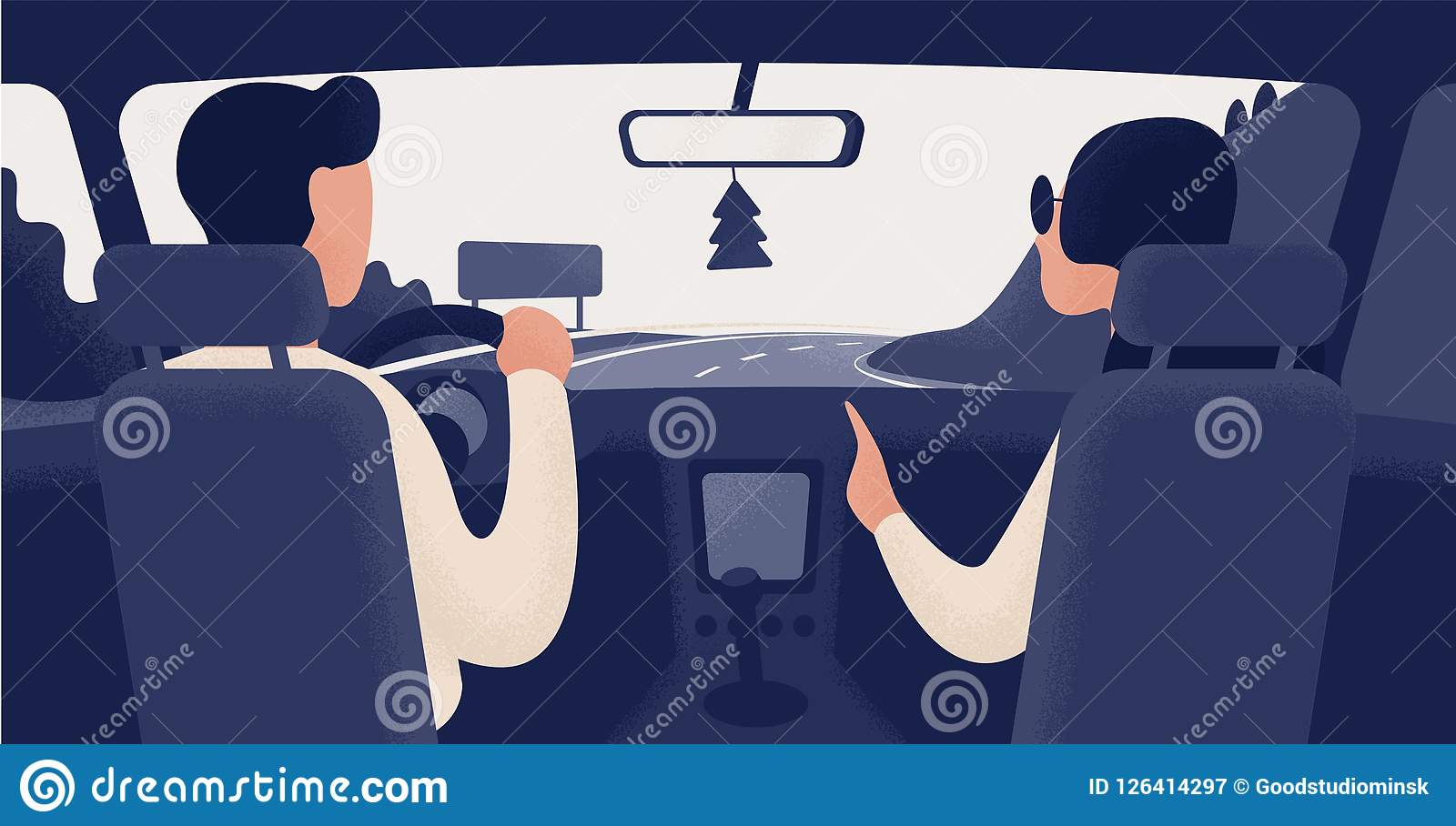
What If I Was Injured While Riding as a Passenger for Work?
You Do Not Have to Be Driving the Vehicle for an Accident to Be Covered by Alabama Workers’ Compensation
When people think about a work-related automobile accident, they usually picture an employee driving a company vehicle. But what if you weren’t driving?
Suppose your supervisor was driving you to a job site, or you were riding with a coworker between work locations. Maybe your employer sent several employees together to perform a job in another city.
Another vehicle causes an accident—or perhaps the person driving your vehicle causes the wreck—and you are seriously injured.
You may wonder: “Can this really be workers’ compensation if I wasn’t even driving?” The answer may be yes.
For Alabama workers’ compensation purposes, the important question generally is not who was behind the wheel. The more important question is: Why were you in the vehicle when the accident happened?
If you were riding in the vehicle because of your employment and were still engaged in work-related activities, your injuries may be covered by Alabama workers’ compensation.
And if someone outside your employer caused the collision, you may also have a separate personal injury claim.
You Don’t Have to Be Driving to Be Working
Workers’ compensation coverage generally depends upon whether an injury arose out of and occurred in the course of employment. That means the analysis focuses upon your relationship to the employment when you were injured—not simply whether you were physically operating a vehicle.
Consider an employee riding with a supervisor from the company’s office to a construction project. The employee is not driving, but why is the employee sitting in that vehicle? Because the employer’s business requires the employee to travel to the job site.
Now consider a home-health employee riding with another employee between patients. Again, the employee may not be driving, but the travel itself may be part of the job.
Being a passenger does not automatically remove the employee from the protection of Alabama’s Workers’ Compensation Act.
Recommended Reading: Is a Car Accident Covered by Alabama Workers’ Compensation? and What does Arising Out of and In the Course of Employment Mean?
Common Examples of Employees Riding as Passengers for Work
There are many situations in which an employee may be riding rather than driving while performing work duties. For example, an employee may be:
- Riding with a supervisor to a customer or job site;
- Traveling with coworkers from one construction project to another;
- Riding in a company truck to perform field work;
- Traveling to training or a work meeting;
- Riding to pick up supplies or equipment;
- Traveling between customers or patients;
- Riding in an employer-provided van;
- Traveling out of town for a temporary work assignment; or
- Returning to the employer’s business after completing an off-site job.
In each situation, the question is whether the trip was sufficiently connected to the employee’s work.
What If My Coworker Was Driving?
Suppose you are riding in a company truck. Your coworker is driving and they loose control of the vehicle, and you are injured.
Your first thought may be: “Do I have to prove my coworker caused the wreck?” Generally, fault is not the central issue in the workers’ compensation claim as Alabama’s workers’ compensation is generally a no-fault system, subject to specific statutory defenses.
If you suffered a compensable job-related injury while riding as a passenger in the course of your employment, you may be entitled to workers’ compensation benefits regardless of whether the accident was caused by your coworker, another driver, bad weather, or another circumstance.
The workers’ compensation question is primarily whether your injury was sufficiently connected to your employment.
Recommended Reading: If My Job Accident Was My Fault, Can I Still Receive Alabama Workers’ Compensation Benefits? Workers’ compensation generally operates differently from an ordinary automobile negligence claim because fault usually is not the deciding issue.
What If Another Driver Caused the Accident?
Now change the example.
You are riding with your supervisor to a job site. Another driver runs a red light and crashes into your vehicle. Now you may have two different claims.
You may have a workers’ compensation claim because you were injured while engaged in work-related travel and you may have A personal injury claim against the negligent driver who caused the collision.
Those claims provide different benefits and operate under different legal rules.
Workers’ compensation may provide authorized medical treatment and disability benefits.
The personal injury claim may allow recovery of damages unavailable through workers’ compensation, including pain and suffering and other damages recognized under Alabama law.
What If I Was Riding in My Coworker’s Personal Vehicle?
This is another common misconception. Some employees believe workers’ compensation applies only when they are riding in a company-owned vehicle. It doesn’t.
Vehicle ownership is generally not the controlling question.
Suppose your employer directs you and another employee to travel from one work location to another. Your coworker volunteers to drive his personal automobile. If you are injured during the trip, the fact that the vehicle belongs to your coworker does not necessarily prevent the injury from being covered.
Again, the important question is: Why were you traveling?
If the trip furthered the employer’s business, workers’ compensation coverage may exist regardless of whether the vehicle belonged to the employer, the driver, or someone else.
What If I Was Simply Riding to Work With a Coworker?
This presents a different situation.
Suppose you and a coworker live near one another. You decide to carpool. Your coworker picks you up each morning, and you ride together to your normal place of employment. You are involved in a car wreck and injured in an accident on the way.
Ordinarily, simply riding to work remains part of your normal commute. The fact that another employee happened to be driving does not necessarily convert the commute into a work-related trip. This is where Alabama’s Going and Coming Rule becomes important.
Generally, injuries occurring during an employee’s normal trip to or from a fixed place of employment are not covered by workers’ compensation, subject to recognized exceptions.
Recommended Reading: Understanding Alabama’s Going and Coming Rule. Whether travel is simply a commute or part of the employee’s work duties can determine whether workers’ compensation coverage exists.
What If My Employer Required Me to Ride With Someone?
That can significantly affect the analysis.
Suppose your employer tells you: “Meet at the shop at 6:00 a.m. Everyone will ride together to the project.” The employees report to the employer’s premises. They load tools. They enter a company vehicle. The supervisor drives them to the project and an accident occurs along the way.
Those facts look very different from two employees voluntarily carpooling from home.
The employer has directed the travel, determined how the employees will get to the work location, and may be exercising control over the trip. Those facts may strongly support an argument that the employees were already acting in the course of their employment when the accident occurred.
What If the Employer Provides Transportation?
Employer-provided transportation can also create important workers’ compensation questions.
Some employers routinely transport employees to remote job sites. Others provide vans or buses.
Construction companies may transport crews from a central location. Agricultural, industrial, and temporary workers may also be transported to changing work locations.
When transportation is furnished as part of the employment arrangement, injuries occurring during that transportation may be analyzed differently from an ordinary commute.
The particular facts matter, including:
- Whether transportation was required;
- Whether the employer controlled the transportation;
- Whether employees reported to a central location first;
- Whether employees were being paid for travel time;
- Whether tools or equipment were being transported;
- Whether the destination was a temporary or changing job site; and
- Whether the travel benefited the employer.
No single fact automatically determines the result; the entire employment relationship and purpose of the trip must be considered.
What If We Were Traveling Between Job Sites?
This is one of the clearest examples of potentially work-related travel.
Suppose a technician finishes a job at one customer’s property. The technician and a coworker then travel to another customer’s property. The coworker drives. You ride as the passenger. An accident occurs between the two locations.
That travel is very different from simply driving from home to work.
The employees are already performing their jobs and are traveling from one work assignment to another. The fact that one employee happens to be the passenger generally does not change the work-related nature of the trip.
What If We Stopped Somewhere for Personal Reasons?
This is where things become more complicated.
Suppose you and your coworker are traveling between jobs. You stop briefly for lunch, or you stop for gasoline. Those kinds of activities may be considered incidental to work-related travel.
Now suppose you substantially depart from the work route to visit a friend, go shopping, or handle an unrelated personal matter. That may constitute a deviation from employment.
Whether workers’ compensation coverage continues can depend upon:
- Why the stop occurred;
- How far the employees departed from the work route;
- How long the deviation lasted;
- Whether the employer permitted the activity; and
- Whether the employees had resumed the employer’s business when the accident occurred.
Recommended Reading: I Ran a Personal Errand When I Was Injured While Driving for Work—Am I Still Covered?
What If I Was Sleeping or Resting While Someone Else Drove?
The fact that a passenger was sleeping or resting does not necessarily mean the person stopped being an employee.
Consider a crew traveling several hours to an out-of-town project. One employee drives while another rests. The passenger may not be actively performing physical work at that moment, but the trip itself may still be required by the employment.
Workers’ compensation generally examines the relationship between the trip and the job—not whether the employee was performing a specific physical task during every minute of travel.
What If I Was Injured While Traveling Out of Town?
Traveling employees can present particularly interesting questions. Suppose an employer sends employees to another city for:
- A construction project;
- Training;
- A conference;
- Equipment installation;
- A temporary assignment; or
- Customer work.
The employees travel together. One employee drives while the others ride as passengers. The workers’ compensation analysis may be broader than it would be for employees simply commuting to their regular workplace.
Business travel frequently requires employees to do things away from the employer’s premises that they would not otherwise be doing.
Recommended Reading: Am I Covered by Workers’ Compensation While Traveling Out of Town for Work?
What Benefits Can Workers’ Compensation Provide?
If the passenger’s injuries are compensable under Alabama workers’ compensation law, benefits may include:
- Authorized medical treatment;
- Temporary Total Disability benefits while unable to work;
- Temporary Partial Disability benefits in appropriate circumstances;
- Permanent Partial Disability benefits;
- Permanent Total Disability benefits in severe cases; and
- Other benefits provided by Alabama’s Workers’ Compensation Act.
The fact that the employee was a passenger instead of the driver does not reduce those benefits.
The nature and severity of the compensable injury determine what benefits may be available.
Recommended Reading: Understanding Alabama Workers’ Compensation Benefits.
Can I Have a Personal Injury Claim Too?
Possibly.
If someone outside the employment relationship caused the collision, a separate third-party personal injury claim may exist. A common example is another negligent motorist.
Suppose you are riding in a company van when a tractor-trailer crosses into your lane.
Your workers’ compensation claim may provide statutory benefits. At the same time, you may have a negligence claim against the driver, trucking company, or other legally responsible parties.
The two claims should be coordinated because workers’ compensation may have reimbursement or subrogation rights if you recover money from the responsible third party.
Recommended Reading: Can I Have Both a Workers’ Compensation Claim and a Personal Injury Claim?
Will Workers’ Compensation Have to Be Paid Back If I Recover From Another Driver?
Potentially.
Under § 25-5-11, Ala. Code 1975, an employer or workers’ compensation insurance carrier may have certain reimbursement, credit, or subrogation rights when an injured employee recovers money from a third party that caused the compensable injury.
That does not mean pursuing the personal injury claim is a mistake as the personal injury claim may provide damages workers’ compensation does not. It does mean both claims should be evaluated together.
Recommended Reading: Will I Have to Pay Workers’ Compensation Back If I Settle a Personal Injury Claim?
The Law
Under § 25-5-51, Ala. Code 1975, an employee generally must suffer an injury arising out of and in the course of employment for workers’ compensation benefits to be available.
Nothing in that requirement says the employee must personally be operating a vehicle. The question is whether the employee’s presence in the vehicle and the travel itself were sufficiently connected to the employment.
When another party causes the accident, § 25-5-11, Ala. Code 1975 may permit the employee to pursue a third-party personal injury claim in addition to workers’ compensation benefits, subject to the employer’s statutory reimbursement and subrogation rights.
Whether a particular passenger injury is compensable depends upon the purpose of the travel and the surrounding facts.
The Bottom Line
You do not have to be driving a vehicle for an automobile accident to qualify as an Alabama workers’ compensation injury. If you were riding as a passenger because your job required or reasonably contemplated the travel, you may still have a workers’ compensation claim.
The most important question is usually not “Who was driving?” It is “Why was I in the vehicle?”
If you were traveling between job sites, riding with a supervisor to perform work, traveling at your employer’s direction, or otherwise furthering your employer’s business, the accident may be work-related.
And if another person or company caused the collision, you may also have a separate personal injury claim.
Experience With Work-Related Automobile Accidents
At Powell & Denny, P.C., we have extensive experience representing employees injured in work-related automobile accidents, including cases involving workers’ compensation benefits and related third-party personal injury claims. Determining whether travel was part of the employment—and identifying every insurance policy and responsible party—can significantly affect the benefits and compensation available after a serious collision.
At Powell & Denny, P.C., we have extensive experience representing injured workers in Alabama workers’ compensation claims and related third-party personal injury claims. When the same accident creates both claims, it is important to understand how they work together. Medical evidence, settlement decisions, workers’ compensation subrogation rights, and other issues in one claim can directly affect the other. Our experience handling both workers’ compensation and personal injury cases allows us to evaluate the entire case—not just one part of it—and work to protect all of the benefits and compensation available to our clients.
If you believe you have a workers compensation and also a personal injury claim against another party-don’t hesitate to contact and speak with one of the experienced attorneys at Powell and Denny today for a free consultation. Appointments are available in person, or virtually via Zoom if more convenient. Powell and Denny would appreciate the opportunity to help. And remember, there is no fee unless you win.
We Wrote the Book
My Alabama Disability Claim by William Powell & Gregory Denny Click Here to Get Your Free Copy


-
 5.0/5.0
A++++++ got results and staff is friendly
-
5.0/5.0
A++++++ got results and staff is friendly
-
5.0/5.0
Persevering for 2-3 years to get my disability. Thank You.
-
5.0/5.0
Persevering for 2-3 years to get my disability. Thank You.
-
 5.0/5.0
William Powell is an excellent attorney and a leader in our local bar.
