
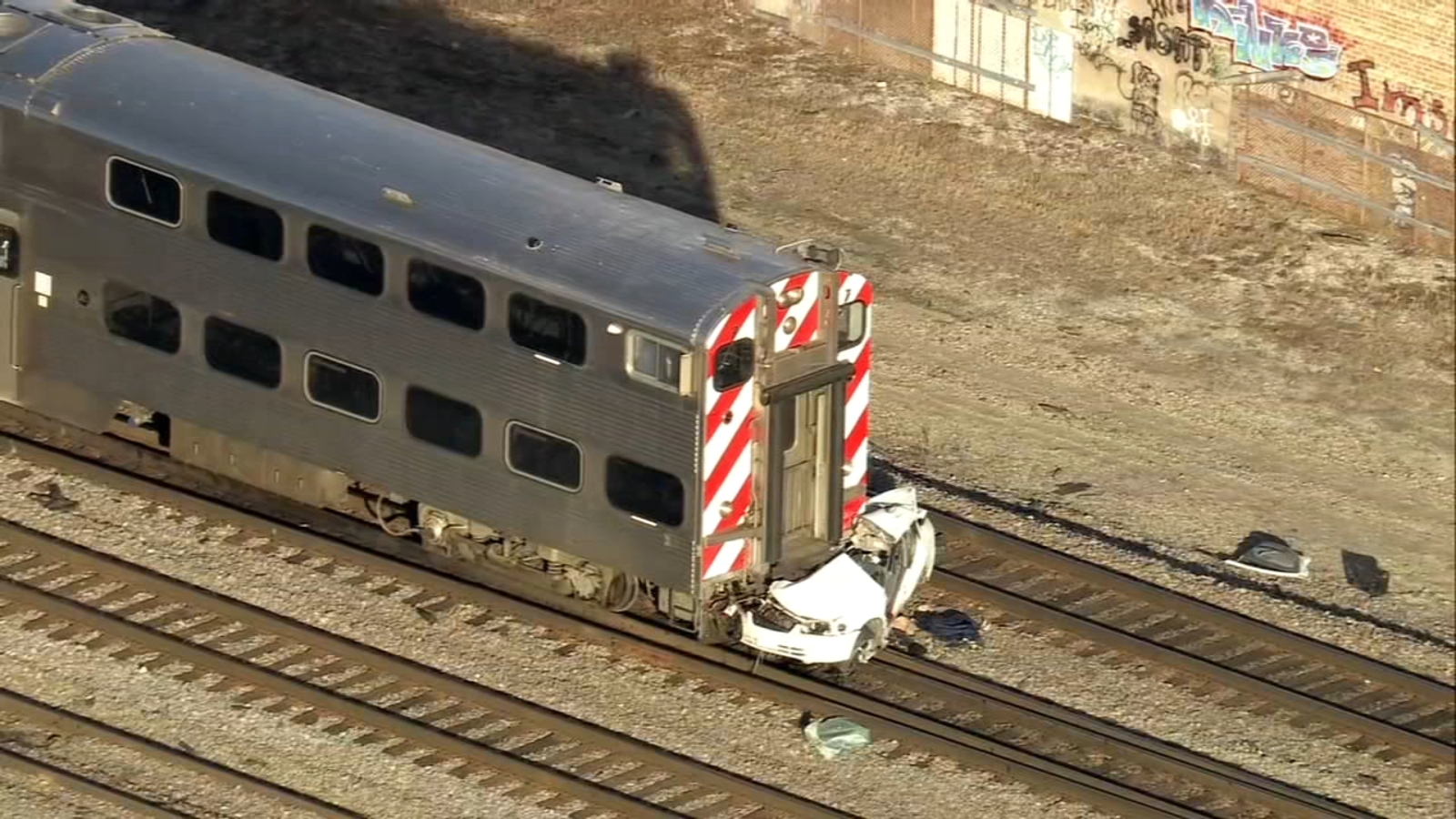
I Was Hit by a Train at a Railroad Crossing in Alabama. Can I Still Recover?
A collision between a train and a car is very different from an ordinary car wreck. The injuries are often catastrophic. The physical evidence may involve the vehicle, railroad tracks, crossing signals, warning devices, sight distances, train speed, event-recording data, video, and evidence concerning whether the train’s horn was sounded.
There is also an important difference under Alabama law.
A driver approaching a railroad crossing has legal duties that do not ordinarily arise when approaching another intersection. Alabama statutes and court decisions impose duties concerning approaching trains and, in appropriate circumstances, stopping, looking, and listening before entering a railroad crossing.
Because Alabama also follows the doctrine of contributory negligence, whether the driver exercised reasonable care at the crossing can become one of the most important issues in the case, but that does not mean every collision between a train and a vehicle is automatically the driver’s fault.
The particular crossing, what the driver could reasonably see and hear, the warning devices present, the conduct of the railroad, and the circumstances immediately before the collision can all matter.
What Does Alabama Law Require a Driver to Do at a Railroad Crossing?
Alabama has a specific statute addressing what motorists must do when approaching a railroad crossing.
Under Ala. Code § 32-5A-150, a driver must stop between 15 and 50 feet from the nearest rail when certain conditions exist, including when:
- a clearly visible electric or mechanical signal warns of an approaching train;
- a crossing gate is lowered or a flagman signals the approach or passage of a train;
- an approaching train within approximately 1,500 feet sounds an audible signal and, because of its speed or nearness, presents an immediate hazard; or
- an approaching train is plainly visible and in hazardous proximity to the crossing.
The statute also prohibits driving through, around, or under a crossing gate while the gate is closed or is being opened or closed.
Alabama law also recognizes a longstanding common-law doctrine generally referred to as “stop, look, and listen.”
Another Alabama statute, Ala. Code § 32-5A-151, imposes mandatory stopping requirements on certain designated vehicles at railroad grade crossings. Significantly, that statute expressly states that nothing in it is intended to modify Alabama’s existing judicial doctrine of “stop, look, and listen.”
Those statutes are important, but applying them to an actual railroad-crossing collision can require much more than simply asking whether the driver came to a complete stop.
What Is Alabama’s “Stop, Look, and Listen” Rule?
Alabama courts have addressed the duties of motorists at railroad crossings for many years. The general rule is that a motorist approaching a railroad crossing must exercise reasonable care for his or her own safety. When the circumstances require it, that includes stopping, looking, and listening for an approaching train before attempting to cross the tracks.
The Alabama Supreme Court discussed this rule extensively in Ridgeway v. CSX Transportation, Inc., 723 So. 2d 600 (Ala. 1998).
Ridgeway is important because it illustrates both the seriousness of a driver’s duty at a railroad crossing and the circumstances under which a driver’s failure to exercise reasonable care can constitute contributory negligence as a matter of law.
What Happened in Ridgeway v. CSX Transportation?
Ridgeway arose from a collision between an automobile and a train at a railroad crossing in Thorsby, Alabama. Debbie Ridgeway was driving across CSX’s railroad tracks when her vehicle was struck by a train. She suffered severe injuries and later died.
The evidence showed that Ms. Ridgeway was familiar with the area and regularly traveled across the crossing. The crossing was marked by a railroad crossbuck, and the tracks themselves were visible. The Court found no obstruction that would have prevented her from seeing the crossing.
There was also evidence that the approaching train’s horn was sounding and its headlights were on.
Two eyewitnesses testified that Ms. Ridgeway did not stop, look, and listen before attempting to cross the tracks, and the Alabama Supreme Court concluded that the undisputed evidence established that Ms. Ridgeway failed to exercise reasonable care and that this failure caused the collision. The Court therefore held that she was contributorily negligent as a matter of law.
That ruling was significant because contributory negligence is a complete defense to an ordinary negligence claim under Alabama law.
Recommended Reading: The Insurance Company Says the Car Wreck Was Partly My Fault. Can I Still Recover in Alabama?
Does Ridgeway Mean the Driver Is Always at Fault When a Car Is Hit by a Train?
No.
This is an important limitation on the general rule. The Alabama Supreme Court specifically recognized in Ridgeway that the stop-look-and-listen rule does not produce the same result in every case regardless of the circumstances.
The Court recognized an exception when special circumstances at the crossing could prevent a motorist exercising reasonable care from being aware of the crossing or the danger it presented. The Court relied upon earlier Alabama decisions explaining that ordinary care depends upon the facts of the particular case.
That means the physical characteristics of the crossing can matter.
For example:
Was the driver’s view of the track obstructed?
Was the crossing difficult to identify?
Did vegetation, buildings, terrain, road configuration, or some other condition interfere with visibility?
Could an approaching train reasonably have been seen?
Were warning signs or devices visible and functioning?
Was there something unusual about the crossing that made it particularly hazardous?
Those questions can distinguish one railroad-crossing case from another.
What If the Railroad Crossing Was Particularly Dangerous?
The Alabama Supreme Court addressed that issue in Norfolk Southern Railroad Co. v. Thompson.
That case also involved a fatal collision between a motor vehicle and a train. The evidence concerning the crossing was materially different from the evidence later considered in Ridgeway. Among other things, evidence was presented concerning the configuration and visibility of the crossing, including a sharp curve in the road, as well as conflicting evidence concerning whether the train’s whistle had been sounded.
The Alabama Supreme Court concluded that the issue of contributory negligence was properly a question for the jury rather than something that could simply be decided against the motorist as a matter of law.
That distinction is important.
Compare the two cases:
In Ridgeway, the Court found that the driver knew the crossing, the crossing and tracks were visible, the view was unobstructed, and the evidence established a failure to stop, look, and listen. The Court found contributory negligence as a matter of law.
In Thompson, evidence concerning the circumstances of the crossing and the warnings created factual questions appropriate for a jury.
The lesson is not that every hazardous crossing creates liability for the railroad; the lesson is that the actual characteristics of the crossing matter.
Does the Railroad Have Duties at a Public Crossing?
Yes.
A driver’s duty to exercise reasonable care does not mean that a railroad has no duties of its own.
Alabama law imposes requirements concerning railroad-crossing warnings, and the particular facts may raise questions concerning the railroad’s operation of the train and maintenance or protection of the crossing.
Depending upon the circumstances, potential issues may include:
- whether required railroad-crossing signs were present;
- whether warning devices were functioning;
- whether the train’s horn or other audible warning was properly sounded;
- whether the train’s lights were operating;
- the speed of the train;
- sight distances at the crossing;
- vegetation or other visual obstructions;
- the history and characteristics of the crossing; and
- whether additional warning devices were warranted under the circumstances.
The existence of duties on both sides is important.
A railroad-crossing case should not necessarily be reduced to only one question: “Did the driver stop?”
The investigation may also need to determine what the railroad did, what warnings were provided, what could reasonably have been seen or heard, and whether any conduct by the railroad contributed to causing the collision.
What If the Train Did Not Sound Its Horn?
Whether a train sounded an audible warning can be an important factual issue.
It was one of the facts discussed in Ridgeway. The train’s engineer testified that he sounded the horn as the train approached the crossing, and another eyewitness corroborated that testimony.
Other railroad-crossing cases have involved disputes over whether an appropriate warning was actually given. That type of dispute can make evidence particularly important.
Witness testimony may matter.
So may locomotive event-recorder information, onboard video or audio when available, crossing records, and other evidence concerning the train’s operation immediately before the collision.
A driver saying, “I never heard a horn,” and the railroad saying, “The horn was sounded,” can create an evidentiary issue that must be investigated rather than assumed.
What If I Was a Passenger in the Car?
A passenger’s case can be significantly different from the driver’s case.
The Alabama Supreme Court’s decision in Haddan v. Norfolk Southern Railway Co., decided in 2022, illustrates why.
Yulanda Haddan was a passenger in a pickup truck that collided with a Norfolk Southern train at a railroad crossing in Lee County. The trial court entered summary judgment for Norfolk Southern, concluding that the driver’s failure to stop, look, and listen was the sole proximate cause of the collision.
The Alabama Supreme Court reversed that portion of the judgment.
The Court concluded that Haddan had presented sufficient evidence to create a factual question concerning whether Norfolk Southern’s conduct also contributed to causing the collision. Among the issues was evidence concerning the absence of lights and a gate at the crossing. The Court explained that a jury could have to determine whether the driver’s conduct was the sole cause of the injury or whether the actions of the driver and railroad combined to cause it.
That is particularly important for passengers.
The negligence of the driver is not automatically treated as the negligence of a passenger merely because the passenger happened to be riding in the vehicle.
Whether another person’s negligence can legally be attributed to a passenger involves additional legal considerations, including whether the passenger had authority or control over the vehicle’s operation.
Can Both the Driver and Railroad Contribute to Causing the Collision?
Potentially, yes.
This is another important point from Haddan.
A railroad may argue that the driver’s failure to stop, look, and listen was the sole cause of the collision, but causation does not necessarily have to be an either-or question.
Depending upon the evidence, a jury may have to decide whether:
- the driver’s conduct alone caused the collision;
- the railroad’s conduct contributed to causing the collision; or
- the conduct of both parties combined to cause the injury.
In Haddan, the Alabama Supreme Court concluded that the evidence created a sufficient factual issue concerning causation to prevent summary judgment for Norfolk Southern. That does not mean Norfolk Southern was ultimately liable. The Supreme Court did not decide the ultimate factual question.
It held that the evidence was sufficient for the case to proceed rather than having the issue resolved against the passenger at the summary-judgment stage.
That distinction is important whenever discussing court decisions.
What Evidence Should Be Preserved After a Railroad-Crossing Collision?
Evidence preservation can be especially important in a railroad case because potentially relevant evidence may be controlled by several different parties. Depending upon the circumstances, an investigation may involve:
- photographs and measurements of the crossing;
- sight-distance measurements;
- photographs of signs, signals, gates, and vegetation;
- vehicle photographs and physical evidence;
- witness statements;
- law-enforcement reports;
- surveillance or nearby business video;
- locomotive event-recorder data;
- locomotive video or audio;
- train-speed information;
- horn or whistle information;
- crossing-signal records;
- inspection and maintenance records;
- records concerning previous incidents or complaints at the crossing;
- information concerning the train crew; and
- electronic data from the automobile when available.
The condition of the crossing itself can also change.
Vegetation can be cut.
Signs can be replaced.
Warning equipment can be repaired.
Vehicles can be destroyed.
Video can be overwritten.
Memories can fade.
For that reason, documenting the crossing and identifying potentially relevant evidence promptly can be particularly important after a serious collision.
Recommended Reading: What Evidence Should I Save After an Alabama Car Wreck?
What If Someone Was Killed in the Railroad-Crossing Collision?
A fatal railroad-crossing collision may involve an Alabama wrongful-death claim.
Alabama wrongful-death law differs significantly from the law of many other states, including in the nature of the damages recoverable.
A death case can also make immediate evidence preservation particularly important because the person who was driving or riding in the vehicle may no longer be available to explain what happened. The investigation may therefore depend heavily on physical evidence, witnesses, electronic data, photographs, video, railroad records, and expert analysis.
The legal issues may include negligence, contributory negligence, causation, the railroad’s conduct, and potentially wantonness depending upon the evidence.
Can Contributory Negligence Defeat a Wantonness Claim Against a Railroad?
No. Contributory negligence is not a defense to wantonness under Alabama law. That distinction was addressed in Ridgeway itself.
Although the Alabama Supreme Court held that Ms. Ridgeway was contributorily negligent as a matter of law and therefore could not recover on the negligence claims, the Court separately analyzed whether there was sufficient evidence of wantonness by CSX.
Under Ala. Code § 6-11-20(b)(3), wantonness means conduct carried on with a reckless or conscious disregard of the rights or safety of others.
The important point is that negligence and wantonness are separate legal theories. A finding of contributory negligence may defeat a negligence claim, but it does not automatically dispose of a properly supported wantonness claim.
At the same time, evidence sufficient to establish negligence does not automatically establish wantonness. The evidence must satisfy the additional requirements of Alabama law for wanton conduct.
Recommended Reading: I Was Injured in a Car Wreck in Alabama. What Are My Rights?
What Should I Do After a Serious Railroad-Crossing Collision?
A railroad-crossing collision can involve legal and factual issues that are not present in an ordinary two-vehicle accident.
The driver’s conduct must be examined. But so should the crossing.
That may mean determining:
What could the driver actually see?
What could the driver actually hear?
What warnings were present?
Were the warning devices working?
Was the train’s horn sounded?
How fast was the train traveling?
Was the crossing unusually difficult or dangerous?
Was the injured person the driver or a passenger?
Did the conduct of more than one party contribute to causing the collision?
Those questions should be answered from evidence rather than assumptions.
Railroad-Crossing Cases Require a Careful Examination of Both the Driver and the Crossing
Alabama law places significant responsibilities on motorists approaching railroad tracks. Ridgeway v. CSX Transportation demonstrates that a driver’s failure to stop, look, and listen can, under appropriate circumstances, constitute contributory negligence as a matter of law.
But Ridgeway also recognizes that the circumstances surrounding the particular crossing matter.
And cases such as Norfolk Southern Railroad Co. v. Thompson and Haddan v. Norfolk Southern Railway Co. demonstrate why the analysis cannot always end with the driver’s conduct.
The characteristics of the crossing, the warnings provided, the railroad’s conduct, causation, and whether the injured person was a driver or passenger can all affect the legal analysis.
If you or a family member has been seriously injured in a collision with a train at an Alabama railroad crossing — don’t hesitate to contact and speak with one of the experienced Alabama Car Wreck attorneys at Powell and Denny today for a free consultation. Appointments are available in person, or virtually via Zoom if more convenient. Powell and Denny would appreciate the opportunity to help. And remember, there is no fee unless you win.
Powell & Denny: We Work When You Can’t.
This article provides general information about Alabama law and is not legal advice concerning any particular case.
We Wrote the Book
My Alabama Disability Claim by William Powell & Gregory Denny Click Here to Get Your Free Copy


-
 5.0/5.0
A++++++ got results and staff is friendly
-
5.0/5.0
A++++++ got results and staff is friendly
-
5.0/5.0
Persevering for 2-3 years to get my disability. Thank You.
-
5.0/5.0
Persevering for 2-3 years to get my disability. Thank You.
-
 5.0/5.0
William Powell is an excellent attorney and a leader in our local bar.
