

Can I Refuse Medical Treatment in an Alabama Workers Compensation Case?
One of the most common disputes in Alabama workers’ compensation claims involves an insurance carrier refusing to authorize treatment recommended by a physician. But what happens when the situation is reversed? What if the authorized treating physician recommends a surgery, procedure, or other treatment that you do not want to undergo? Can workers’ compensation force you to have medical treatment? The short answer is No; you cannot be forced to undergo medical treatment against your will. However, refusing recommended treatment can have significant consequences for your workers’ compensation claim.
The Legal Question Is Whether Your Refusal Is Reasonable
Under Alabama workers’ compensation law, the issue is usually not whether you refused treatment, the issue is whether your refusal is considered reasonable under the circumstances.
If a dispute arises, a judge—not the insurance company and not the physician—ultimately determines whether your refusal was reasonable.
When Might a Refusal Be Considered Reasonable?
Every case is different, but courts generally consider factors such as:
- the risks associated with the procedure,
- the likelihood of success,
- potential complications,
- your overall health,
- your sincerely held religious beliefs,
- whether the treatment is experimental
Religious Objections
If a recommended treatment conflicts with sincerely held religious beliefs, courts are generally reluctant to force a person to choose between their faith and their benefits.
Experimental Procedures
An injured worker is not required to become a test subject. If a proposed treatment is experimental or lacks a proven track record of success, a refusal may be considered reasonable.
Significant Medical Risks
Some procedures carry substantial risks. For example, if surgery presents a meaningful risk of paralysis, infection, worsening symptoms, or other serious complications, an injured worker may have legitimate grounds for declining treatment.
Uncertain Outcomes
The law generally does not require an injured worker to undergo a procedure that offers little chance of improving their condition. When physicians cannot provide reasonable assurance that a procedure will likely help, a refusal may be justified.
What About Back Surgery?
Back and neck surgeries frequently generate disputes in workers’ compensation cases. Unlike some orthopedic procedures that have highly predictable outcomes, spinal surgeries often involve:
- varying success rates
- lengthy recovery periods
- the possibility of additional surgeries
- ongoing pain despite treatment
As a result, courts are often more willing to consider an injured worker’s concerns about spinal surgery than they might be regarding a relatively routine procedure.
When Might a Refusal Be Considered Unreasonable?
Not every refusal will be protected. For example, if the procedure is widely accepted, the risks are relatively low and the likelihood of improvement is high-a judge may determine that refusing treatment is unreasonable. Something like refusing to have carpel tunnel surgery or surgery for a torn ACL would generally not be held to be reasonable-absent some religious objection or other medical condition that makes such routine procedures questionable.
How Can Refusing Treatment Affect My Benefits?
This is where the issue becomes important. If your refusal is found to be reasonable, Alabama law may allow the suspension of certain workers’ compensation benefits until you comply with the recommended treatment. Because the consequences can be significant, refusing treatment should never be a decision made lightly.
Additionally, if refusal is determined to be unreasonable, your claim will generally continue based upon your condition as it exists after conservative treatment has been exhausted. In many cases, the claim proceeds as though you have reached Maximum Medical Improvement (MMI) without undergoing the recommended procedure, and that would directly impact the amount of compensation you might be entitled to receive for your injury-so the decision to refuse medical care is not one to be taken without much thought.
Workers’ compensation provides medical treatment designed to help injured employees recover and return to productive lives. At the same time, Alabama law recognizes that injured workers maintain the right to make decisions regarding their own medical care. The key issue is often not whether treatment was refused, but whether the refusal was reasonable under the circumstances.
If you have questions about surgery recommendations, authorized medical treatment, Maximum Medical Improvement (MMI), or your rights under Alabama’s workers’ compensation laws, it may be helpful to speak with an attorney experienced in handling work injury claims. At Powell and Denny, we have spent decades representing injured workers throughout Alabama and helping them navigate complex medical and legal issues arising from workplace injuries.
If you have suffered a job injury and you have questions about your rights and benefits under Alabama’s workers compensation laws -don’t hesitate to contact and speak with one of the experienced Alabama Workers Compensation and Social Security Disability attorneys at Powell and Denny today for a free consultation. Appointments are available in person, or virtually via Zoom if more convenient. Powell and Denny would appreciate the opportunity to help. And remember, there is no fee unless you win.
Powell and Denny: We Work When You Can’t
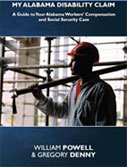
We Wrote the Book
My Alabama Disability Claim by William Powell & Gregory Denny Click Here to Get Your Free Copy


-
 5.0/5.0
A++++++ got results and staff is friendly
-
5.0/5.0
A++++++ got results and staff is friendly
-
5.0/5.0
Persevering for 2-3 years to get my disability. Thank You.
-
5.0/5.0
Persevering for 2-3 years to get my disability. Thank You.
-
 5.0/5.0
William Powell is an excellent attorney and a leader in our local bar.
