By William Powell of Powell & Denny | Published June 27, 2026 | Posted in Social Security Disability, Workers Compensation |
Search Site

Free Consultation
800-227-0882
Category Archive
Social Security Disability
How Can Social Security Find Me Disabled but Workers Compensation Deny Permanent Total Disability?
How Can Social Security Find Me Disabled but Workers Compensation Deny Permanent Total Disability? One of the most frustrating situations an injured worker can face is being awarded Social Security Disability benefits, only to have their employer or workers’ compensation insurance company argue that they are not permanently and totally disabled under Alabama’s Workers’ Compensation Read More
Read MoreWhat Is a Vocational Expert and What do they do in My Case?
What Is a Vocational Expert and What do they do in My Case? Many injured workers and disability claimants are surprised to learn that doctors are not always the only experts involved in their case. In both Alabama workers’ compensation claims and Social Security Disability cases, another type of expert may play an important role: Read More
Read MoreWhy Does Social Security Care How Old I Am? Understanding Age Categories and the Grid Rules
Why Does Social Security Care How Old I Am? Understanding Age Categories and the Grid Rules One of the most surprising things many Social Security Disability claimants learn is that age can significantly affect the outcome of a disability claim. Many people assume disability cases are decided solely by medical evidence. They think: “Either I Read More
Read MoreCan I Receive Disability Benefits for Migraine Headaches?
Can I Receive Disability Benefits for Migraine Headaches? Migraine headaches are far more than “bad headaches,” anyone who has experienced a severe migraine knows they can be completely debilitating. Many migraine sufferers experience symptoms such as: Severe head pain; Nausea and vomiting; Sensitivity to light; Sensitivity to sound; Visual disturbances; Dizziness; Difficulty concentrating; The need Read More
Read MoreI Was Seriously Hurt at Work and Can’t Work, Can I Receive Workers’ Compensation and Social Security Disability Benefits?
I Was Seriously Hurt at Work and Can’t Work, Can I Receive Workers’ Compensation and Social Security Disability Benefits? One of the most common misconceptions about serious workplace injuries is that workers’ compensation is the only benefit available to an injured worker. In reality, many workers who suffer severe injuries may qualify for both: Alabama Read More
Read MoreWhat Is Off Task Behavior and Why Does It Matter in a Social Security Disability or Alabama Workers’ Compensation Case?
What Is Off Task Behavior and Why Does It Matter in a Social Security Disability or Alabama Workers Compensation Case? One of the most important concepts in a Social Security Disability case is something many claimants have never heard of: Off-task behavior. In fact, some disability claims are won or lost based not on a Read More
Read MoreI Owe Child Support, Will That Affect My Social Security Disability Claim?
I Owe Child Support, Will That Affect My Social Security Disability Claim? One of the most common questions we hear from disability claimants is “I owe child support. Will that affect my Social Security Disability claim?” The answer depends upon several factors, including: Whether you are receiving SSDI or SSI benefits; Whether you owe current Read More
Read MoreCan Social Security Deny My Disability Claim Because I Could Not Afford Medical Treatment?
Can Social Security Deny My Disability Claim Because I Could Not Afford Medical Treatment? One of the most frustrating situations faced by many Social Security Disability claimants occurs when Social Security questions their credibility because they stopped seeing doctors, stopped taking medication, or went months—or even years—without receiving medical treatment. For many disabled individuals, the Read More
Read MoreWhat Is an Alleged Onset Date and Why Does It Matter in a Social Security Disability Claim?
What Is an Alleged Onset Date and Why Does It Matter in a Social Security Disability Claim? One of the most important dates in a Social Security Disability claim is something known as the Alleged Onset Date, often referred to as the AOD, and many people applying for Social Security Disability benefits misunderstand what this Read More
Read MoreWill Social Security Use My Daily Activities Against Me?
Will Social Security Use My Daily Activities Against Me? One of the most common concerns disability claimants have is: “If I can still grocery shop, drive a car, or attend church, does that mean Social Security will deny my claim?” Unfortunately, daily activities frequently become an issue in Social Security Disability cases. However, many claimants Read More
Read More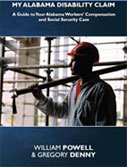
We Wrote the Book
My Alabama Disability Claim by William Powell & Gregory Denny Click Here to Get Your Free Copy


Client Reviews
-
 5.0/5.0
A++++++ got results and staff is friendly
-
5.0/5.0
A++++++ got results and staff is friendly
-
5.0/5.0
Persevering for 2-3 years to get my disability. Thank You.
-
5.0/5.0
Persevering for 2-3 years to get my disability. Thank You.
-
 5.0/5.0
William Powell is an excellent attorney and a leader in our local bar.
